Energy Supply Chain: Why Data Has Become the New Fuel of Resilience
Summary
- Introduction: A sector at a crossroads
- The 2026 price shock: Analysing volatility to better cope with it
- FOUR DATA : Intelligence at the heart of the tank
- The Transition to Biofuel: A Traceability Challenge
- Transforming the supply chain through digitalisation
- Why choose FOUR DATA to fit your tanks with connected sensors?
- Conclusion: Data: the key to survival and sovereignty
Faced with unprecedented volatility in oil prices and the imperatives of the green transition, the French fuel sector is undergoing a historic transformation. Against a backdrop of geopolitical instability and the introduction of F55 biofuel, the management of logistics data – driven by technology companies such as FOUR DATA – is emerging as a safeguard for distributors, ensuring the energy security of regions across France and Europe.
Introduction: A sector at a crossroads
Spring 2026 marks a definitive turning point for the distribution of liquid fuels in France. As the global energy landscape is reshaped by persistent geopolitical tensions, the “3C” sector (Fuel, Motor Fuel, Heating) is no longer content merely to deliver products: it must now manage data. For the 800 companies and 1,400 establishments represented by the FF3C trade association, the challenge is no longer merely logistical; it is existential.
In a context where the Multi-Year Energy Plan (PPE 3) mandates accelerated decarbonisation, data has become the deciding factor between profitability and extinction. How do precision sensors, such as those developed by FOUR DATA, enable this constraint to be transformed into a strategic opportunity?
The 2026 price shock: Analysing volatility to better cope with it
1. A volatile geopolitical context
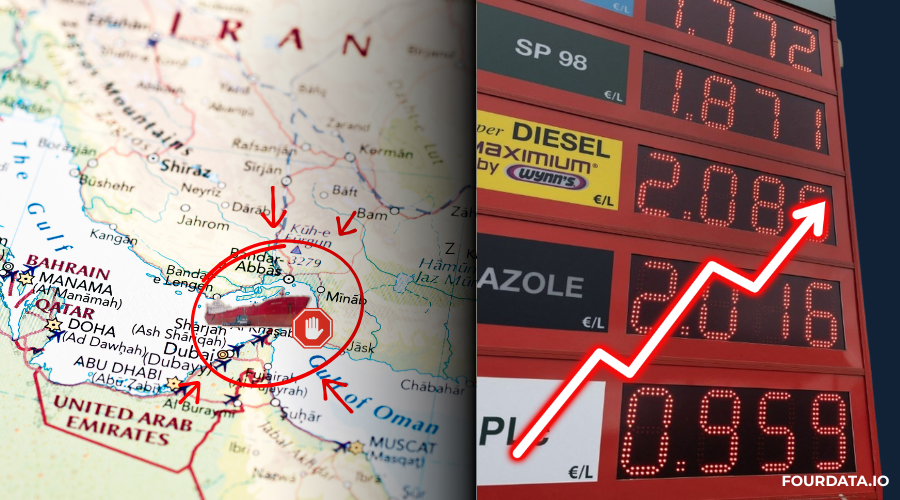
As of 26 March 2026, the editorial by FF3C President Emmanuel Ampaud is clear: although no physical shortage of the product has been observed, the market is experiencing a sudden “price shock”. The war in the Middle East, affecting an area that is highly sensitive for the global supply of hydrocarbons, is fuelling persistent speculation.
This uncertainty is reflected in soaring prices for crude oil and refined products, directly impacting distributors who source their supplies on a “delivered” basis on the French market. These distributors face daily price fluctuations linked to Rotterdam market quotations, which are often indexed to S&P Global’s publications.
2. Key economic indicators (Q4 2025–2026)
Data from the Data and Statistical Studies Department (SDES) published in February 2026 reveal contrasting trends that it is crucial to monitor using data:
- Total consumption: 16.6 million tonnes in the fourth quarter of 2025, representing a slight year-on-year increase of 0.8%.
- Road diesel: A 3.2% drop in sales, reflecting the gradual phase-out of diesel engines.
- Premium fuels: A strong increase of 5.2%, driven by SP95-E10, which now accounts for 59% of sales in its category.
- Domestic heating oil: A marked rise of 11.7% in deliveries at the end of 2025, driven by a temporary fall in the average price (-3% over the quarter).
3. The financial risks to the supply chain
Pour un distributeur, la hausse du prix au litre n’est pas une bonne nouvelle. Elle entraîne une augmentation mécanique du chiffre d’affaires sans forcément accroître les marges, tout en alourdissant la charge fiscale et les besoins en trésorerie. Le risque d’impayés augmente et les encours sont soumis à des restrictions strictes de la part des assureurs-crédit.
FOUR DATA : Intelligence at the heart of the tank
In this volatile market, the French company FOUR DATA is here to support fuel distributors. Its connected level sensors provide data for supply chain management.
1. Why are FOUR DATA’s sensors a game-changer?
Managing “tool stocks” (secondary depots and customer tanks) is the key to success. Inaccurate stock levels can lead to two major financial disasters:
- Stock-outs: These undermine customer relationships and necessitate costly and inefficient emergency deliveries.
- Sub-optimal partial deliveries: Sending a lorry for 500 litres when it could deliver 2,000 is an ecological and financial absurdity in a context of high fuel prices.
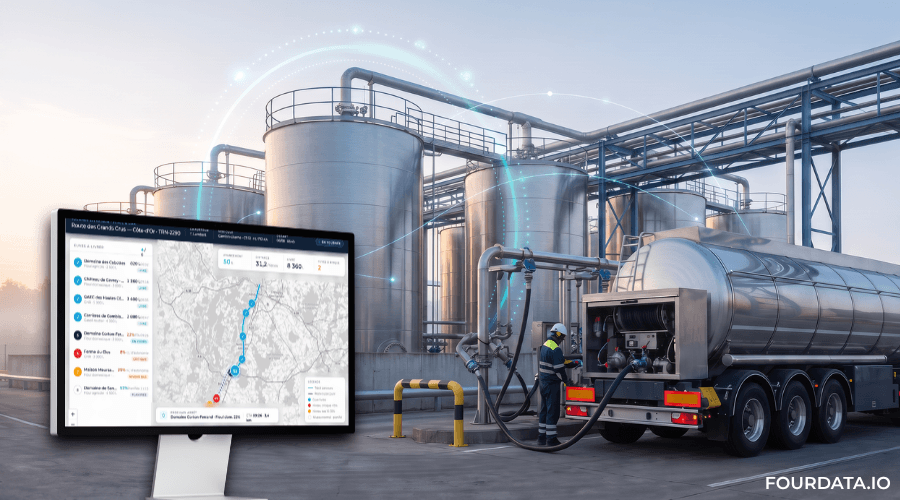
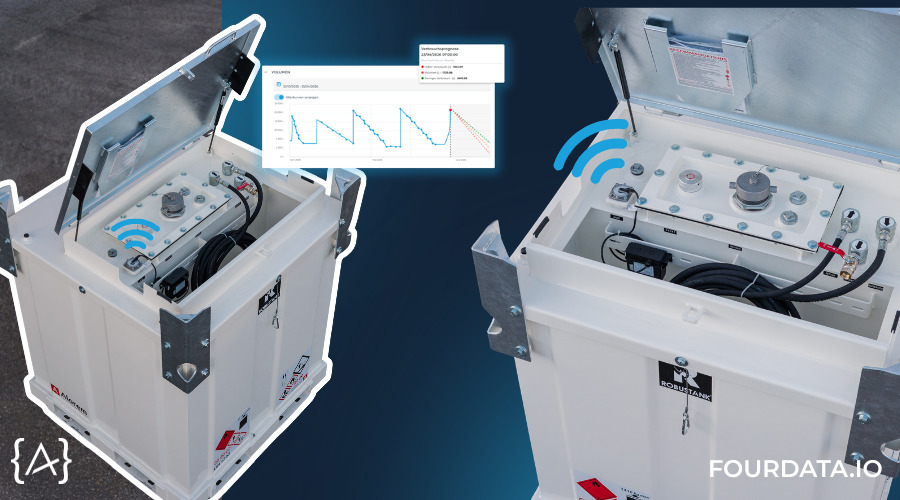
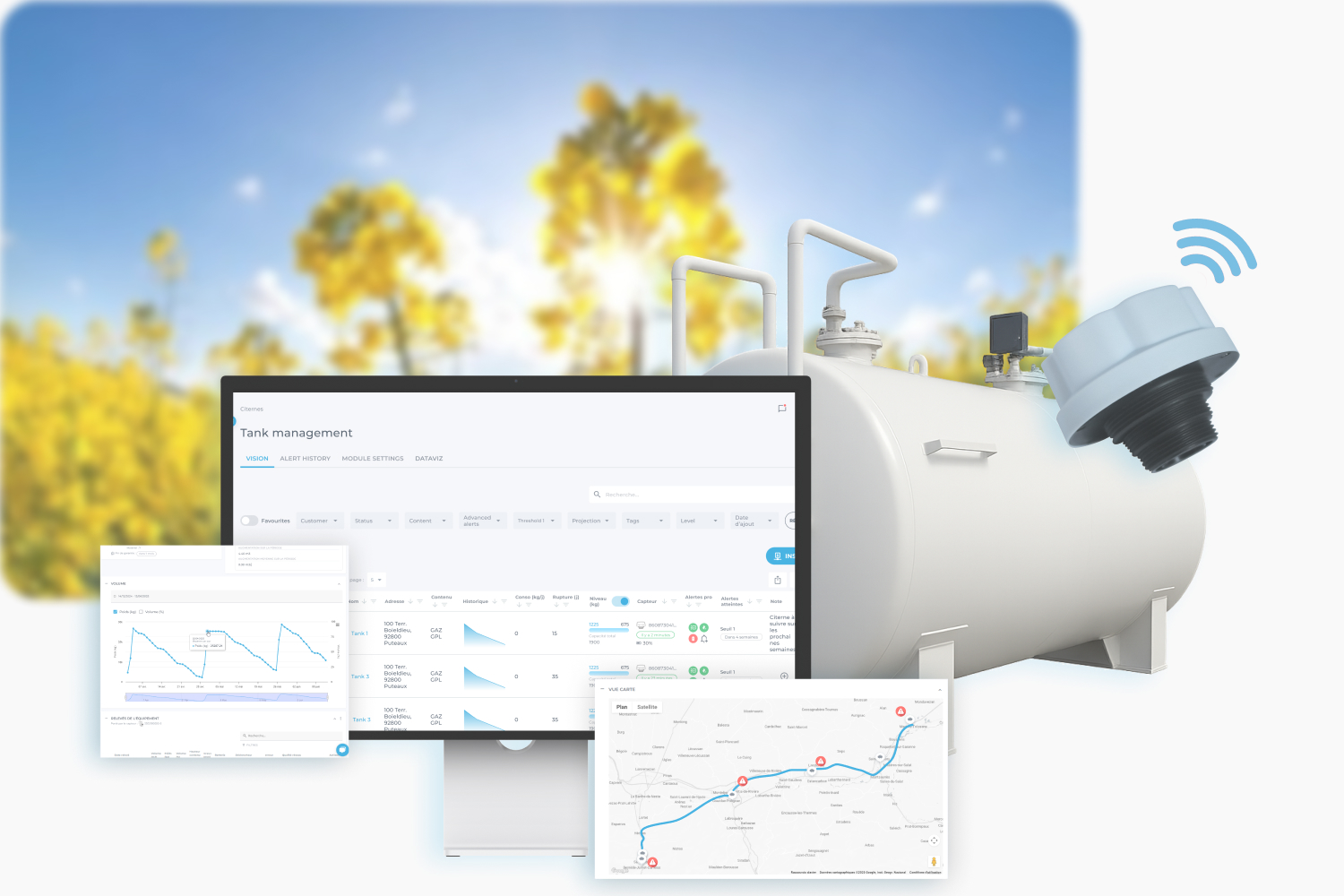
FOUR DATA’s solutions provide visibility across the entire tank fleet, transforming each tank into a strategic data point integrated into the distributor’s ERP system.
2. Security and regulatory compliance
The decree of 1 July 2004, which remains in force in 2026, sets out minimum requirements for the storage of petroleum products in order to protect the environment. Article 5.2 of this decree stipulates that all tanks must be fitted with a gauging device. By using FOUR DATA sensors, professionals ensure not only full legal compliance but also the early detection of leaks, thereby preventing serious environmental disasters.
The Transition to Biofuel: A Traceability Challenge
La transition énergétique n’est plus une perspective lointaine, c’est une réalité opérationnelle. Depuis juillet 2022, l’installation de chaudières 100 % fioul fossile est interdite, laissant place au Biofioul F30.
1. The F30, F55 and F100 routes
The year 2026 is a pivotal year for the standardisation of F55, a biofuel comprising 55% renewable energy (primarily rapeseed methyl ester).
- Technical validation: Endurance tests conducted by Cetiat confirm the compatibility of new boilers with biofuels containing up to 100% Emag (F100).
- Standardisation: The Bureau de Normalisation des Énergies Liquides (BN ELIP) is working on the administrative specifications for F55, with a planned market launch in early 2027.
2. The risk of “environmental fraud” and the role of data
The gradual replacement of fossil fuel oil with biofuel oil is creating new logistical challenges. Distributors must ensure that the correct product is delivered to the correct tank, or they risk being held liable. The expected update to the 2004 decree could impose strict checks on the nature of the product stored. Here, data becomes evidence: monitoring systems enable the precise tracking of biofuel volumes delivered, providing a guarantee of compliance for both the distributor and the end consumer.
Transforming the supply chain through digitalisation
1. Redesign of the directories and online visibility
In 2026, the FF3C trade union launched a new interface for its business directories on the biofioul.info website. This platform now pinpoints the locations of three types of networks: F30 distributors, “Biofioul Expert” heating engineers and tank cleaning specialists. For a distributor, having a digital presence is essential, but being able to promise a precise delivery time based on reliable data is the real competitive advantage.
2. The impact of Energy Saving Certificates (ESCs)
The CEE scheme is entering its sixth phase (2026–2030) with heightened ambitions. However, this phase marks a disproportionate increase in the levy on domestic heating oil and motor fuels (a rise of over 90 per cent, according to the trade union). This cost, at nearly 15 euro cents per litre (including VAT), weighs heavily on competitiveness. Logistics optimisation through data is therefore no longer a luxury, but a necessity to offset this growing parafiscal charge.
Why choose FOUR DATA to fit your tanks with connected sensors?
In this rapidly changing ecosystem, choosing a technology partner is not a decision to be taken lightly. FOUR DATA stands out thanks to three fundamental pillars that address today’s challenges:
- Industrial Reliability: In a sector where storage environments are challenging (underground tanks, humidity, ATEX zones), the robustness of the sensors ensures long-term reliability.
- Interoperability: The ability to merge tank-level data with route planning tools helps reduce the carbon footprint of logistics, a compelling argument in light of PPE 3 requirements.
- Data Sovereignty: At a time when energy security is at the heart of ministerial debates, entrusting data flows to a French company guarantees protection against economic espionage and ensures local responsiveness.
Conclusion: Data: the key to survival and sovereignty
The energy landscape in 2026 bears little resemblance to that of 2004. Whilst the regulations of that time laid the foundations for physical security, it is now ‘logical security’ and the accuracy of information that determine a company’s survival.
Faced with price volatility and the inevitable decline of traditional fossil fuels, the switch to Biofuel F55 and diversification into wood energy are the only viable options. But these transitions will only succeed if they are underpinned by a modern, agile and ultra-connected supply chain.
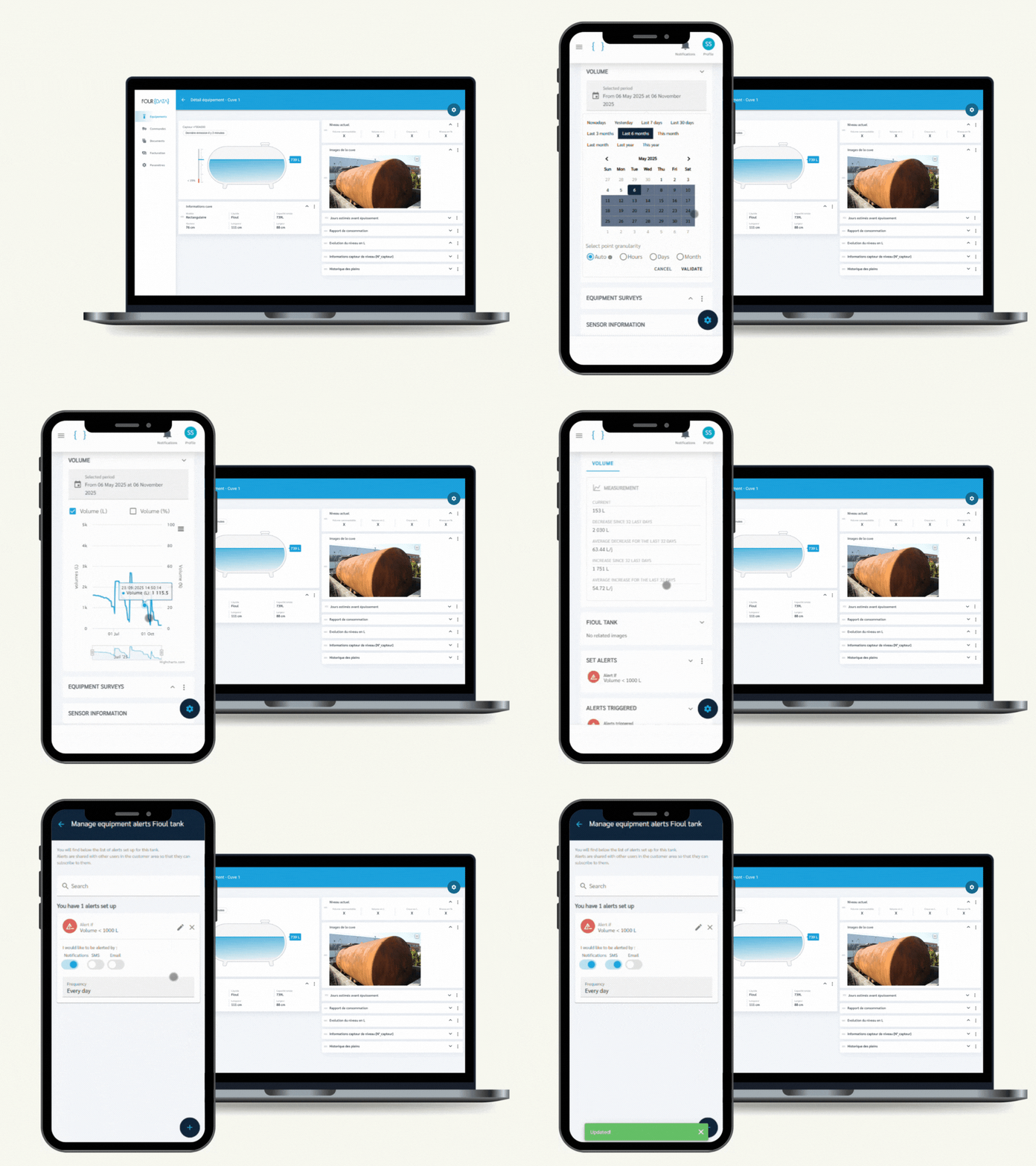
By integrating smart metering solutions such as those from FOUR DATA, distributors are not merely enduring the energy transition imposed by the government: they are becoming proactive players, capable of guaranteeing every household and every business, even in the most remote areas, reliable, transparent and sustainable access to energy.
You may also be interested in these articles :