
Heating oil tank – types, use, costs and future at a glance
Summary
- Understanding heating oil tanks – function, use and inventory
- Types, materials and service life of heating oil tanks
- Tank size, consumption and economy
- Regulations, safety and the future of heating oil tanks
- Smart heating oil tanks – monitoring, data and optimization
- FAQ – Frequently asked questions about heating oil tanks
- Conclusion – Heating oil tanks between existing and smart future
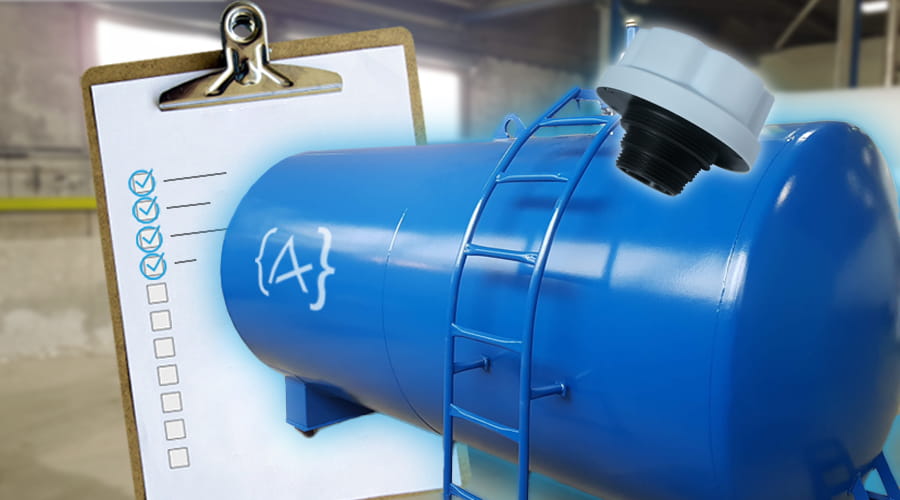
The heating oil tank is still a central component of many oil oil heating systems in Germany. Whether in the cellar of a house or above ground tank system installed – it influences the safety, efficiency and costs of the heating authoritative. This overview provides practical information, outlines legal requirements and explains how modern technology and data can optimize usage.
Understanding heating oil tanks – function, use and inventory
What is a heating oil tank and how does it work?
A heating oil tank is used for the safe storage of heating oilwhich an oil heating or a boiler supplied. Depending on the version, it consists of plastic, steel or polyethylene and is usually installed in the cellar or above ground. The heating oil is transported from the tank to the heating system via pipes, where it is stored in the Condensing boiler or boiler is burned. The tank system must be leak-proof, approved and professionally installed.
What role does the heating oil tank still play today?
Despite the energy turnaround heating oil tank still plays an important role today, especially in rural areas or in existing buildings without a gas or district heating connection. Many households continue to use old oil heating systems or modernized systems with condensing technology. The focus is increasingly on safe operation, Modernization and efficient use. Digital solutions and data help to manage consumption better and save costs.
Types, materials and service life of heating oil tanks
Comparison of plastic, steel and underground tanks
Heating oil tanks differ primarily in terms of their material and design. The choice influences safety, maintenance requirements and area of application.
| Material | Advantages | Disadvantages | Recommended use |
|---|---|---|---|
| Plastic (polyethylene) | corrosion-free, lightweight, easy to install | sensitive to heat | Basement, detached house |
| steel | Very robust, durable | Risk of corrosion, heavy | Larger tank systems |
| underground tank | space-saving, protected | High installation costs | Plots with outdoor area |
Service life, ageing and typical risks
The service life of a heating oil tank is between 30 and 40 years, depending on the material and use. However, technical risks increase with age, especially in older systems without modern safety equipment.
Which tank solution suits which building?
The right tank solution depends heavily on the building and its use:
- Detached house: compact plastic tank in the basement
- Apartment building: steel tank or battery tanks
- Remote locations: underground tank for space optimization
Tank size, consumption and economy
What heating oil tank sizes are available?
The size of a heating oil tank is measured in liters and is based on the annual requirement. The usual amounts are
- Small tanksup to approx. 1,500 liters, for low consumption
- Medium tanks2,000 to 3,000 liters, standard in single-family homes
- Large tanksover 4,000 liters, for high heating capacity or several residential units
The right capacity prevents frequent refilling and optimizes storage.
Estimate heating oil consumption correctly
The heating oil consumption depends on several factors: Building area, insulation, heating behavior and technology used such as condensing boiler. As a rule of thumb, the better the efficiency of the Heatingthe lower the requirement. A rough estimate results from living space × consumption index, without detailed calculation.
How long does a heating oil tank with 3,000 liters last?
A 3,000 liter heating oil tank is usually sufficient for one heating year for an average single-family home. However, the actual period varies depending on the winter, building condition and usage. With an economical driving style, the tank may even last longer.
Practical example
A household with modern heating and good insulation can often get by with 3,000 liters for 12 to 15 months.
Regulations, safety and the future of heating oil tanks
How long are heating oil tanks still permitted?
Heating oil tanks are still permitted in Germany as long as they comply with legal regulations comply. Existing installations may be operated, even in the event of a old oil heatingas long as safety and environmental requirements are met. Restrictions mainly affect the installation of new oil heating systems in certain buildings. The focus is therefore less on a ban and more on the safe and efficient use of existing tank systems.
Legal requirements and inspection obligations
Heating oil tanks are subject to clear safety requirementsin particular within the framework of the Ordinance on Installations for Handling Substances Hazardous to Water. Operators must observe the following points:
- Regular checks
- Tested tightness of the tank system
- Compliance with periodic inspection obligations
Note
The specific requirements may vary depending on the federal state or protected area.
Continue to use, modernize or replace?
Whether a heating oil tank can continue to be used depends on its condition, age and technology. Intact tanks can often be Modernization continue to operate safely, for example with additional safety equipment or monitoring. Replacement is advisable in the event of serious defects or lack of approval.
Smart heating oil tanks – monitoring, data and optimization
Why level and consumption data are crucial
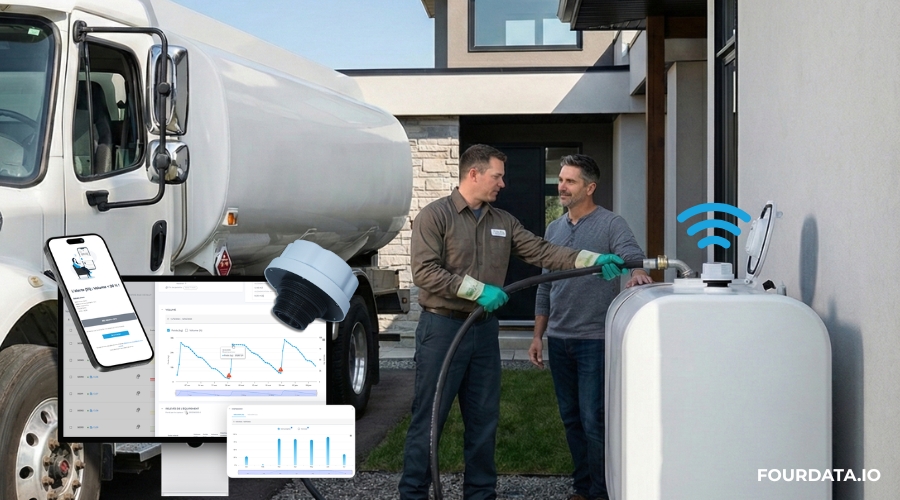
Current Fill level and consumption data create transparency about the condition of the heating oil tank. They enable better anticipation of deliveries, increase the Security during operation and reduce the risk of vacancies or overfilling. Data therefore forms the basis for more efficient and predictable use of heating oil.
From manual control to intelligent tank monitoring
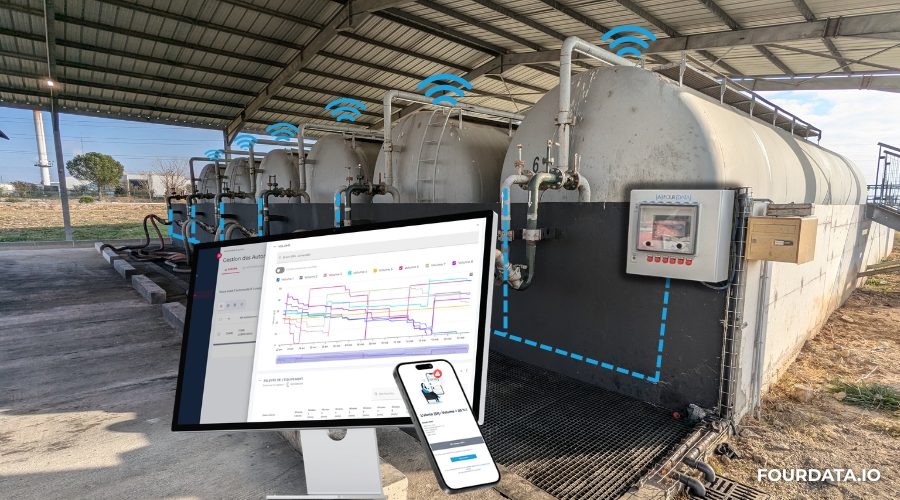
While manual monitoring is time-consuming and inaccurate, intelligent monitoring allows continuous monitoring. The most important advantages are
- Automatic detection of the tank level
- Early detection of irregularities
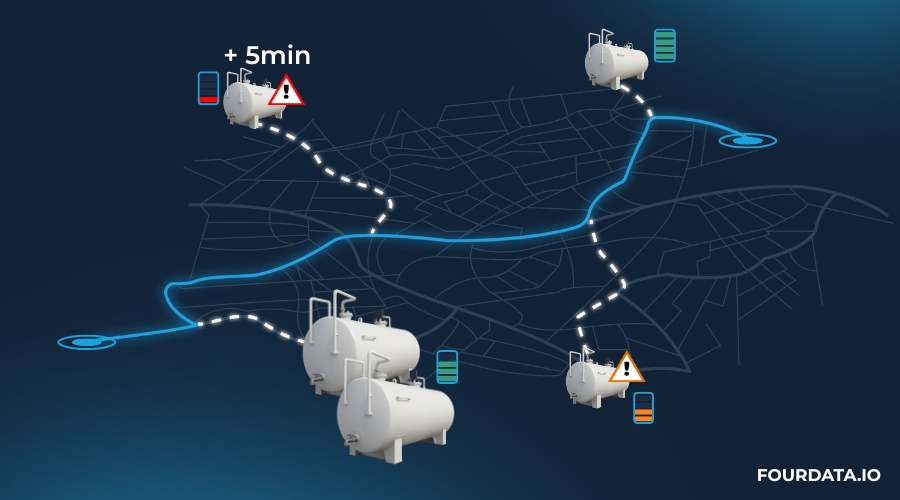
- Better planning of refills
How we at Four Data optimize heating oil tanks based on data
At Four Data, we rely on IoT technology and data analysisto reliably monitor heating oil tanks. Our solutions record relevant measured values, display them clearly and support operators in making informed decisions. The focus is on operational safety, efficiency and sustainable use of existing systems.
FAQ – Frequently asked questions about heating oil tanks
Conclusion – Heating oil tanks between existing and smart future
Heating oil tanks remain an important component of existing heating systems if they are operated safely, efficiently and in compliance with regulations. The future lies in the intelligent use of existing systems: monitoring and data-based approaches can reduce risks, optimize consumption and make informed decisions about operation, modernization or conversion.
You may also be interested in these articles :