
Sustainability and IoT: leverage to reduce Oil & Gas’ environmental footprint
Summary
In a context where environmental environmental and social are imposing themselves on the entireindustrythe IoT is becoming an essential lever for reduce consumptionoptimizeenergy and improve resources. Thanks to the IoT technologytechnology, smart sensors and data collectioncompanies can monitor their operations in real-timereduce their carbon footprint and embark on a genuine environmental sustainability. These IoT solutions, designed to be sustainableThese are helping to transform a historically energy-intensive sector into a more responsible and efficient model.
The urgent need for a more responsible industry
Environmental issues in Oil & Gas
The Oil & Gas sector faces major challenges: increasing gas emissions à emissions, energy consumption and increasing regulatory pressure. Companies must now reconcile economic performance with the reduction of environmental impact. environmental impactwhile meeting market expectations in terms of social responsibility andsustainable development objectives. On a global scale, players need to adapt their processes to protect resources and limit their ecological footprint.
IoT, a catalyst for performance and sustainability
Thanks to data collection and IoTtechnology, companies can monitor their facilities in in real timeoptimize energy consumption and reduce losses. Visit connected objects enable intelligent management operations, improved decision-makingand contribute to consumption reduction and carbon footprint. By enhancing visibility over critical assets, the IoT becomes a key tool for environmental sustainability measurable.
Understanding IoT sustainability solutions
Definition and key principles
A sustainable IoT solution is based on data collectionand connectivity and devices designed to optimizeenergyreduceenvironmental impact and extend the life cycle equipment. The aim is to use connected objects able to measure, analyze and reduce resource consumption while improving environmental and environmental and economic performance of organizations.
The 3 links of a sustainable IoT system
- Intelligent sensors Intelligent sensors: measure levels, flows, air or water quality in real time.
- Low-power connectivity optimized networks (wireless, low power, LPWAN) for lower energy consumption.
- Management platform: data analysis, alerts, operations optimization and decision-making.
The 5 Cs of IoT applied to sustainability
| Pillar | Role in sustainability |
|---|---|
| Cognition | analyze data and detect anomalies. |
| Communication | transmit information reliably and with low power consumption. |
| Connectivity | ensure a robust link via intelligent networks. |
| Cloud | centralize and process big data. |
| Conclusion | transform analyses into actions that reduce ourenvironmental footprint. |
IoT for sustainable development
Reducing energy consumption and emissions
L’sustainable IoT plays a key role in reduce energy d’energy consumption consumption and greenhouse gas emissions in the industry. Drawing on smart sensorscompanies can monitor their electricity consumption in real timeand optimize their processes. This approach improves energy efficiencyreduces losses and enhances environmental protection. The data collected facilitates decision-making to adapt consumption to actual needs, while at the same time reducing environmental impact.
Optimized management of water and resources
- Intelligent watering to limit water wastage in industrial and agricultural areas.
- Automatic leak detection thanks to low-power connected objects.
- Continuous analysis of water or raw material levels via an IoT monitoring system.
- Optimizing consumption to make better use of natural resources.
Circular economy and predictive maintenance
The IoT makes it possible to implement a logic ofcircular economy by extending the life cycle through real-time diagnostics. Visit predictive maintenanceThis data-analysis-driven system anticipates failures and reduces the waste associated with premature equipment replacement. Companies can thus reduce ecological footprintoptimize materials and protect the environment through a more sustainable and resilient model.
Use case: sustainable IoT solutions in Oil & Gas
Intelligent tank and vessel monitoring
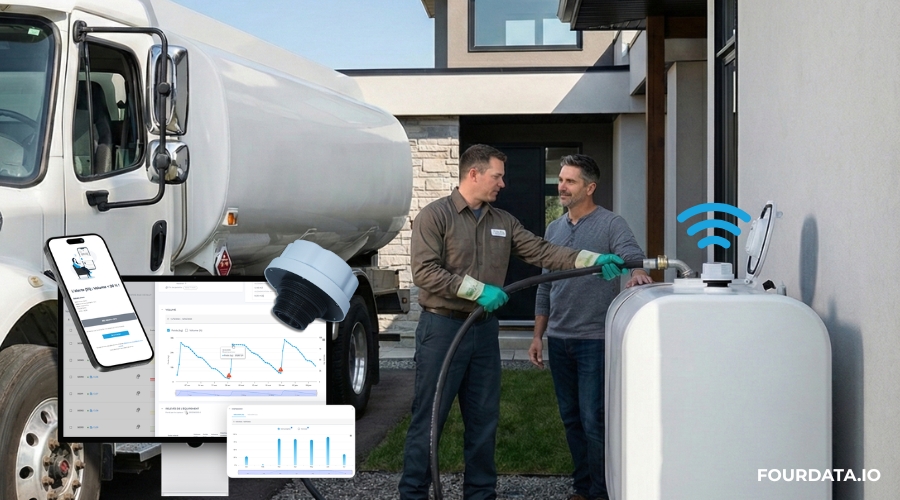
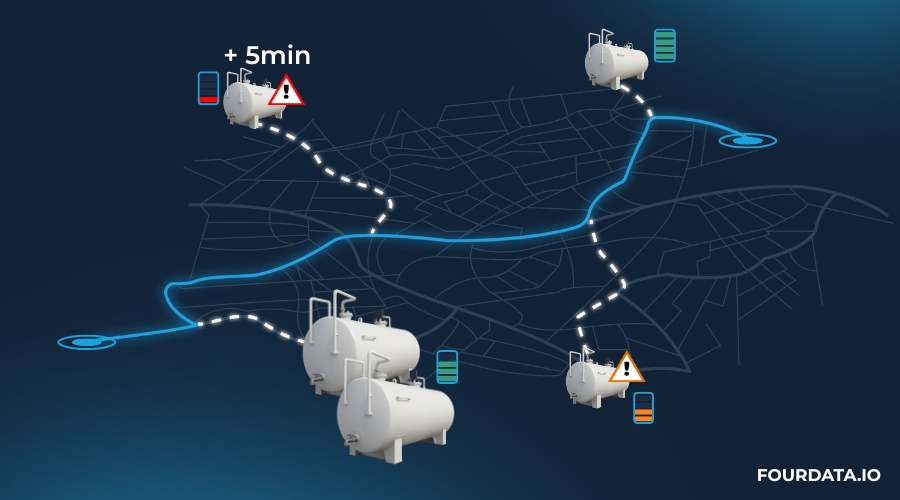
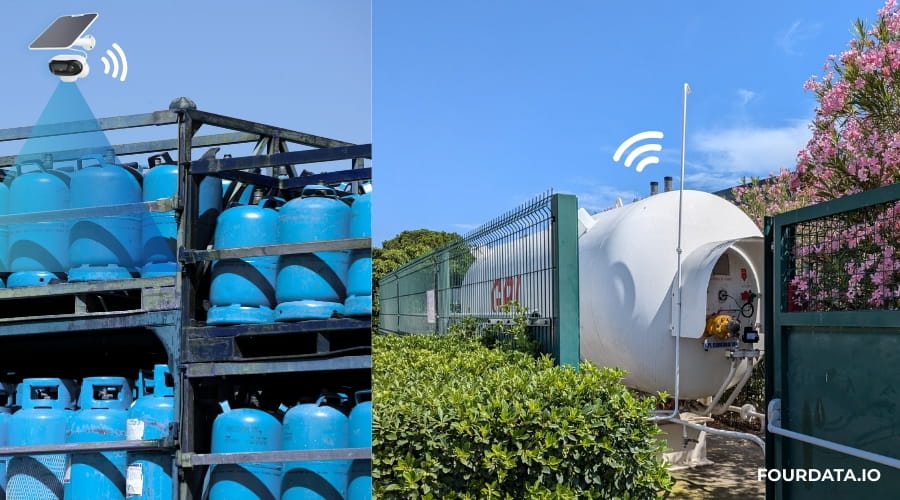
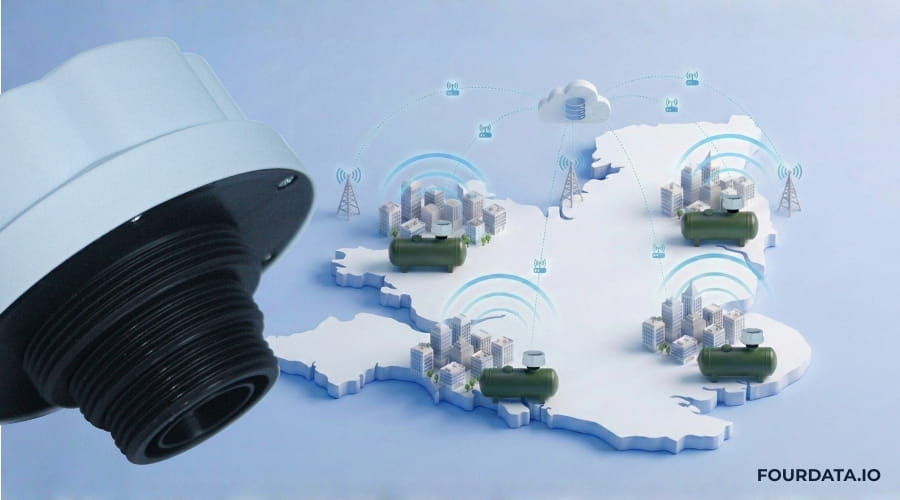
In the Oil & Gas industry, monitoring tank levels remains a major challenge for optimizing intelligent management operations. Thanks to IoT sensorssensors, companies can monitor tank status in real-timedetect abnormal variations, anticipate the risk of a leaksand adapt their tours. This type of IoT solution reduces superfluous journeys, cuts fuel fuel consumption and improves service reliability. These connected objects also enable better use of resources, while reducing reducing the environmental impact impact of logistics operations.
Predictive maintenance and leak detection
By combining pressure and temperature sensors with field data, companies can implement predictive predictive maintenance aimed at detecting anomalies before they have an impact on production. This approach, in line with environmental sustainabilityreduces the risk of incidents, protects natural resources and extends service life equipment. Automated monitoring limits interruptions and enables you to reduce operating costs through targeted intervention.
Leveraging data to optimize energy performance
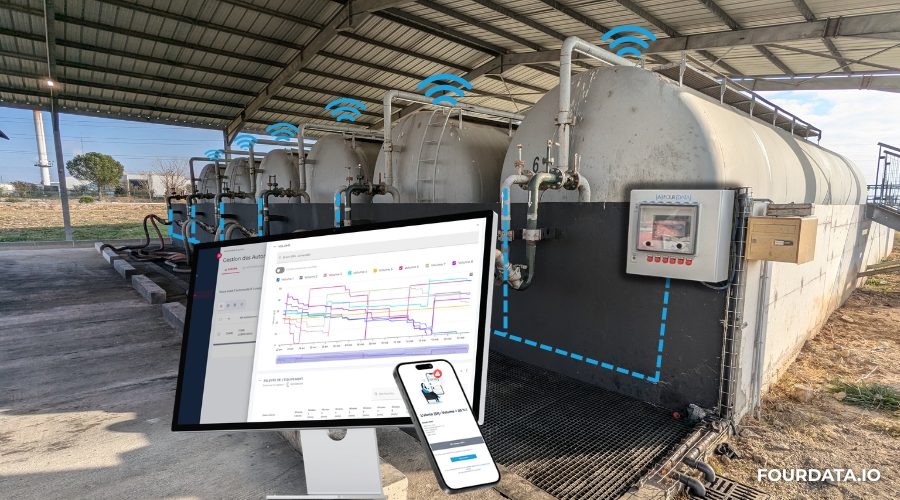
IoT platforms offer a global vision for analyzing flows, tracking energy energy consumption and improveenergy efficiency at every stage of the process. By leveraging a comprehensive dashboard, teams can monitor trends, spot anomalies and adjust their operations to minimize the impact on the environment. environmental footprint. This enhancement of data also helps decision-makers align their strategy with their objectives. sustainable development goalswhile taking advantage of big data to optimize the entire system.
Our Four Data approach to responsible IoT
Eco-responsible design from hardware to cloud
At Four Data, we design and manufacture our IoT sensors sensors at Francein the heart of Bourgogne-Franche-Comtéto support the local economy and guarantee high quality high. Our probes are designed to reduce environmental impact and designed to extend their lifecycles. life cycleThey offer optimized energy consumption while incorporating sustainable materials. This approach enables us to offer IoT solutions solutions, from the sensor to the cloud.
Data security, compliance and sustainability
- Strict compliance with RGPD and privacy.
- Sovereign, secure, high-performance hosting.
- Reduce cloud redundancy to reduce energy footprint.
Controlled hardware and software integration
Our devices feature modular electronics modular electronics These include non-resinned boards, interchangeable components, replaceable batteries and remote software maintenance. This architecture facilitates implementationand parts replacement, and prolongs the product’s service life of every connected object. Combined with an optimized cloud workflow (sensor → API → dashboard), this model guarantees a intelligent management.
Measuring and managing the sustainable impact of an IoT project
Key indicators: carbon footprint, consumption and environmental ROI
To evaluate a sustainablesustainable IoTproject, it is essential to track the right indicators to report on progress and guide decision-making.
Here is a summary table:
| Indicator | Target | Unit of measurement |
|---|---|---|
| Carbon footprint | Reducingenvironmental impact | kg CO₂e |
| Energy consumption | Optimizingenergy efficiency | kWh / site |
| Environmental ROI | Measuring the benefits of green technologies | % or €/year |
Monitoring and reporting tools via IoT platform
Our platform centralizes data collection in real-time and provides a comprehensive dashboard displaying trends, alerts, levels, energy performance and emissions trends. This visualization facilitates analysis, helps to optimize operations and supports companies in implement their sustainable sustainable development.
Case study: from data to sustainable decisions
Thanks to continuous monitoring and automatic feedback, one of our customers has adjusted its consumption and optimized its operating cycles.
Towards the future of connected sustainability
Digital twins and predictive maintenance
The digital twins open up a new potential for companies seeking to optimize their processes while reducing their environmental impact. By virtually replicating a piece of equipment, a network or an industrial site, it becomes possible to simulate scenarios, anticipate failures and improve reliability. predictive maintenance. This approach reduces unnecessary interventions, lengthens the lifetime and limits resource consumption.
Artificial intelligence and energy efficiency
The combination of artificial intelligence and IoT technology technology boostsenergy efficiency organizations. Algorithms analyze data by real-timedetect deviations and automatically optimize energy consumption and propose corrective actions. This automation helps to reduce emissions, improve operational performance and accelerate the process. transition to a greener model.
Myth vs. Reality: “Polluting IoT” or “Sustainable IoT?”
| Myth | Reality |
|---|---|
| “IoT increases power consumption” |
Modern IoT solutions use low-power networks, limiting bandwidth and reducing overall consumption. |
| “Connected objects create waste” |
Four Data sensors are repairable, scalable, designed for a long life cycle and integrated into a circular economy logic. |
| “IoT undermines sustainability environment” |
IoT helps reduce emissions, optimize resources and support sustainable development goals. |
FAQs
IoT, the driving force behind sustainable industrial transition
Technology and responsibility: an inseparable duo
The IoT plays a central role in the energy transitionby enabling better monitoring of installations, reducing greenhouse gas emissionsoptimize consumption and enhance operational reliability. By combining green technology and responsibility, companies gain in performance and sustainability.
Four Data’s commitment to a more sustainable future
A committed French company, Four Data designs IoT solutions responsible and repairable, designed to protect the environment while improving operational efficiency. Combining innovation, IoT technology and digital sobriety, we support your organizations towards a responsible sustainable project.
You may also be interested in these articles :