
Energy monitoring – understanding and monitoring energy consumption and reducing costs
Summary
- What is energy monitoring?
- Why is energy monitoring a strategic lever for companies?
- How does a modern energy monitoring system work technically?
- Where is energy monitoring used? Typical areas of application
- How can energy monitoring be successfully introduced?
- Energy monitoring with Four Data – IoT solutions from a single source
- Frequently asked questions about energy monitoring (FAQ)
Rising energy costs, increasing energy consumption and the requirements of the energy transition in Germany are presenting companies and households with new challenges. Today, energy monitoring forms the basis for modern energy management by enabling energy consumption to be monitored, data to be systematically recorded and well-founded decisions to be made.
By systematically recording and analyzing energy consumption, energy costs can be cut, costs reduced and a sustainable increase in energy efficiency achieved – in a targeted, continuous and data-based manner.
What is energy monitoring?
Definition and basic functionality
Energy monitoring refers to the systematic recording and continuous monitoring of energy consumption and energy flows within a company, plant or building. The aim is to measure energy in a targeted manner, collect relevant data, evaluate it and derive specific measures for optimization.
Modern energy monitoring follows a clear logic: measure, collect, analyze and optimize. Electrical consumption and other energy sources are recorded using measuring devices, meters and sensors, collected centrally in a monitoring system and continuously analyzed. This allows deviations, peak loads and potential savings to be identified quickly and energy use to be controlled more efficiently.
Differentiation from energy management and energy controlling
Energy monitoring is not the same as energy management or energy controlling, but complements them in a meaningful way. It provides the basis for further strategies and decisions.
| Energy monitoring | Energy management | Energy controlling |
|---|---|---|
| Acquisition & analysis of energy data | Strategic energy management | Economic evaluation |
Why is energy monitoring a strategic lever for companies?
Transparency of energy consumption as a basis for decision-making
Energy monitoring creates reliable transparency about energy consumption during operation. Continuous monitoring and analysis provides companies with a fact-based foundation for making faster and more targeted decisions. Relevant energy data is available at all times and makes energy flows traceable.
- Clear view of energy consumption in real time
- Comparison of processes, systems and locations
- Early detection of deviations and load peaks
Reducing energy costs and increasing efficiency
Based on the data collected, specific measures can be derived to reduce energy costs and sustainably drive efficiency improvements. Energy monitoring helps to identify unnecessary consumption, make processes more efficient and prioritize investments. As a result, energy is not only used more economically, but also measurably optimized.
Contribution to sustainability and climate targets
Energy monitoring helps companies to manage their sustainability in a measurable way and to present progress transparently. Reliable data is essential in order to meet internal targets and external requirements.
How does a modern energy monitoring system work technically?
Measuring devices and sensors for energy detection
An energy monitoring system begins with the precise recording of consumption at the right points. Measuring devices, meters and sensors that cover different energy sources and processes are used for this purpose. They form the technical basis for systematic recording and reliable analysis of energy consumption.
- Electrical current (machines, systems, distribution boards)
- Gas, water and heat
- Production machinery and technical equipment
The choice of suitable devices determines the quality of the subsequent evaluation.
IoT-based data acquisition and real-time monitoring
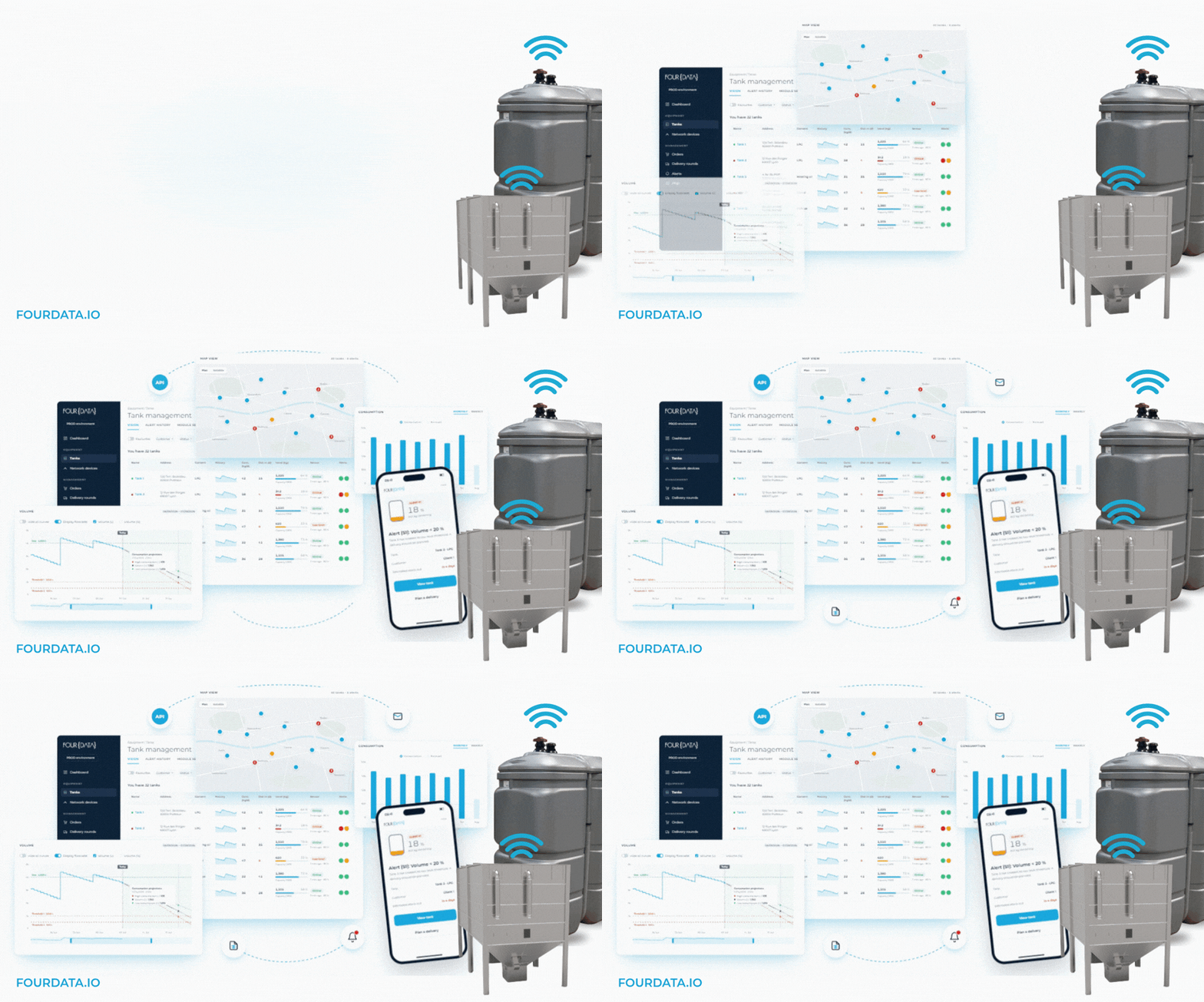
The recorded data is transmitted continuously via IoT technologies and collected centrally. This continuous recording enables energy consumption to be monitored and analyzed in real time. Deviations, peak loads or inefficient processes can be quickly identified and controlled in a targeted manner. The system works independently of existing infrastructures and can be gradually integrated into ongoing processes.
Software, data analysis and reporting
The software level evaluates the collected data and makes it usable. Intuitive interfaces give companies a clear overview and allow them to derive optimizations.
- Dashboards with detailed consumption data
- Automatic alerts in the event of deviations
- Historical analyses for continuous optimization
Where is energy monitoring used? Typical areas of application
Industry and production
In industry and production, energy monitoring enables precise monitoring of systems, machines and processes. Energy consumption is recorded continuously so that inefficient processes and peak loads can be identified at an early stage. This enables companies to initiate targeted optimization measures and increase the efficiency of their production.
Office, commercial and non-residential buildings
In office and commercial buildings, energy monitoring creates transparency regarding the consumption of individual areas of use. Heating, air conditioning and lighting systems can be controlled more efficiently and adapted to actual requirements. This can reduce energy costs and avoid unnecessary consumption.
Companies with multiple locations
For companies with several locations, energy monitoring offers a centralized view of all energy flows. Different locations can be compared, evaluated and optimized in a targeted manner without having to intervene on site.
How can energy monitoring be successfully introduced?
Target definition and analysis of energy consumption
A successful implementation starts with clearly defined goals. Companies need to determine what energy consumption they want to monitor and what results they want to achieve. Analyzing existing energy data helps to set priorities and realistically assess actual requirements.
Selection of the relevant measuring points
Not every meter is relevant. The decisive factor is the targeted selection of the measuring points where energy losses or potential savings occur. This is the only way for energy monitoring to provide meaningful data for later decisions.
Use of data for continuous optimization
The collected data only unfolds its benefits through active evaluation. Regular analyses enable continuous optimization of processes and systems and lead to improved efficiency in the long term.
Energy monitoring with Four Data – IoT solutions from a single source
Our IoT platform for intelligent energy monitoring
We have been supporting our customers in the implementation of high-performance energy monitoring systems for several years. As a software and hardware manufacturer, we at Four Data develop modular and agnostic IoT platforms that can be flexibly adapted to existing systems, infrastructures and requirements. Our solution combines sensors, devices and software to create an end-to-end monitoring system for companies of all sizes.
From data acquisition to value creation
We support companies throughout the entire project cycle: from recording and analyzing energy data to deriving specific measures. The collected data is evaluated in a structured manner in order to control processes in a targeted manner, optimize the use of energy and achieve measurable improvements.
Frequently asked questions about energy monitoring (FAQ)
You may also be interested in these articles :