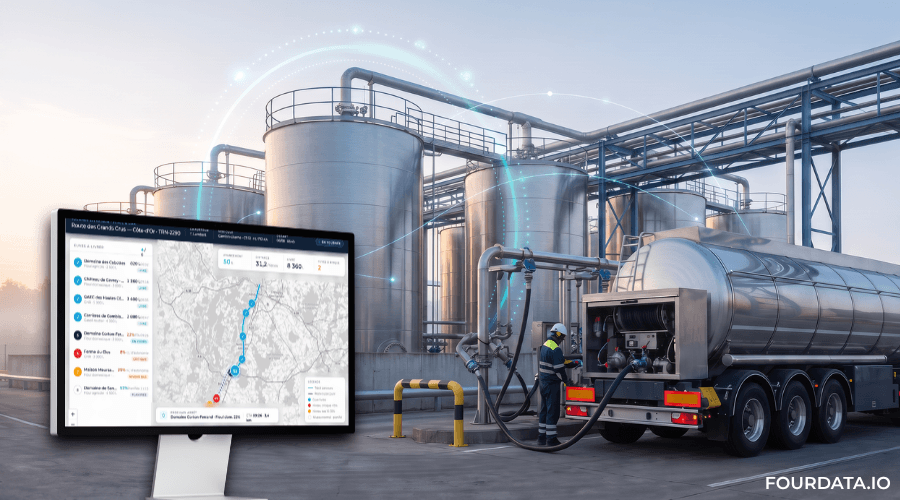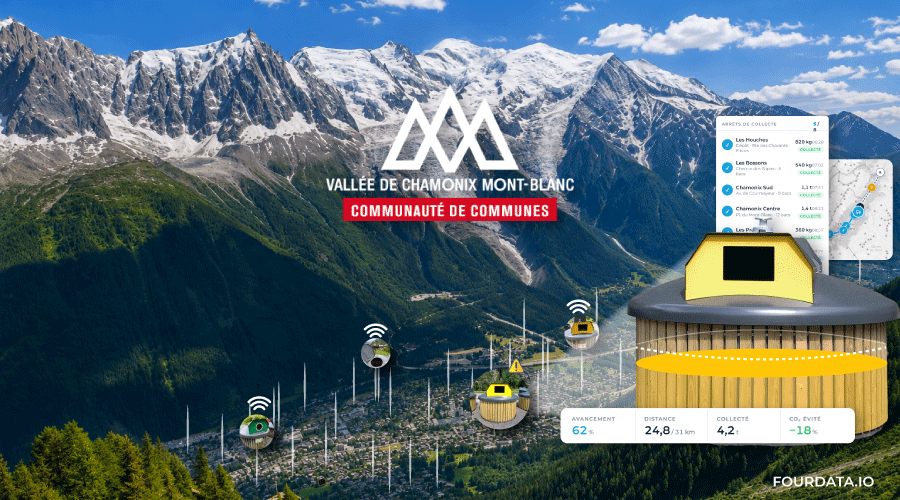

Connected Monitoring of Pellet Inventories and Tanks: A Case Study from Guignard in Switzerland
Summary
Published on July 22, 2026 · Updated on July 22, 2026 · 8-minute read · By David Rotaru, Key Account Manager for Switzerland, Germany, and Austria

Contents
What this feedback covers:
- In short
- The challenge: managing a fleet of silos without spending all day on the road
- The solution: connected level sensors, a single platform
- How Guignard Manages Its Daily Supply Chain
- How can you monitor the level of a pellet silo remotely?
- Reassured end customers, a distributor with a better reputation
- Next step: connected depots
- From the pellet silo to the heating oil tank: a connected local ecosystem
- The Swiss Market Is Still Open
- FAQs
In French-speaking Switzerland, a cold winter is enough to empty the silos faster than expected. Pellet distributors know this: when demand spikes, a poorly planned delivery route results in customers running out of pellets and trucks leaving with half their loads still on board.
Guignard, a company based in French-speaking Switzerland that specializes in heating oil, fuels, and pellets, has taken a different approach. Since last winter, it has been using connected monitoring for pellet inventory: its customers’ silos are equipped with Four Data connected level sensors, and the entire fleet is monitored from a single interface, without the need to travel.
Key Figure
Of the approximately 80,000 sensors deployed by FOUR DATA in Europe, a growing number are installed in wood pellet silos. The technology, which has been proven effective for fuel oil and LPG, delivers the same benefits when applied to wood pellets.
In short
- Client: Société Guignard — distributor of heating oil, fuels, and pellets in French-speaking Switzerland
- Industry: distribution of heating fuel (wood pellets), heating oil, lubricants, etc.
- Challenge: Remotely monitor pellet and tank levels at a group of customers whose consumption varies significantly by season, without increasing the number of on-site inspections
- Solution: Four Data connected level sensors + centralized monitoring on the Desk platform
- In service since: the winter of 2024–2025
- Key benefit: Schedule deliveries based on actual levels rather than estimates, and prioritize the silos that need them
The challenge: managing a fleet of silos and tanks without spending all day on the road
Pellet or fuel consumption can’t be predicted using a spreadsheet. It depends on the weather, the type of building, and each household’s habits. A customer who used to go two months between deliveries might need to reorder fuel in just three weeks if the temperature drops. Multiply that uncertainty by an entire customer base, and manual tracking becomes a gamble.
Before telemetry, Guignard was facing the same challenges as most distributors:
- customer calls to report low levels;
- regular checks that take up time;
- the difficulty of determining which one should be delivered first.
- Customer calls to report low levels
- On-site physical inspections: time + fuel
- Rough estimates of consumption
- Underfilled routes or rush deliveries
- Actual levels of all silos/tanks, remotely
- Configurable alert thresholds by site
- Routes prioritized based on actual needs
- Trucks loaded to meet demand as closely as possible
The risk at the end of the chain is a fuel shortage —a sensitive issue in French-speaking Switzerland.
Note
proPellets.ch, the Swiss trade association for the wood pellet industry, has repeatedly warned of supply shortages during winter demand peaks.
For a distributor, every physical inspection of a silo or tank costs time and fuel. And every rough estimate results in underfilled delivery routes or emergency deliveries. The real challenge wasn’t “seeing” the levels, but knowing, every morning, where to send the trucks.
The solution: connected level sensors, a single platform
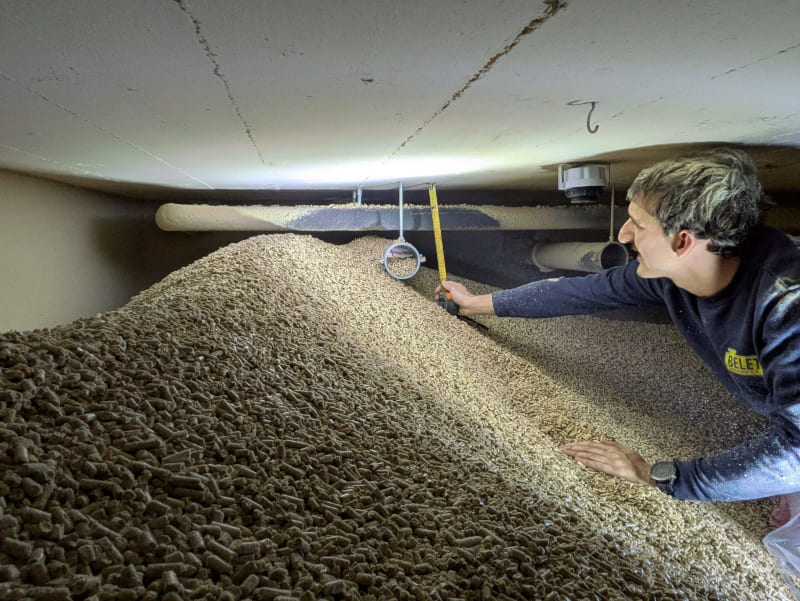
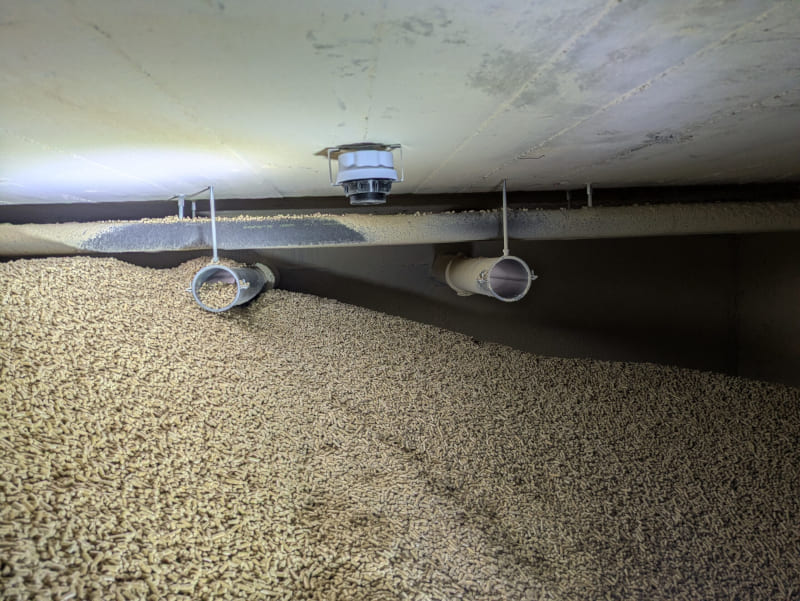
FOUR DATA designs and manufactures non-intrusive level sensors that are mounted at the top of a silo or tank and measure the distance to the surface of the granules or fuel.
For a solid product like pellets, ultrasonic measurement is the gold standard: it does not come into contact with the fuel, can be installed without drilling into the silo, and is suitable for both existing and new installations.
The sensor transmits its readings at regular intervals via a low-bandwidth network (NB-IoT, LTE-M, or LoRaWAN, depending on coverage at the site), without the need for wiring or customer intervention.

Caution
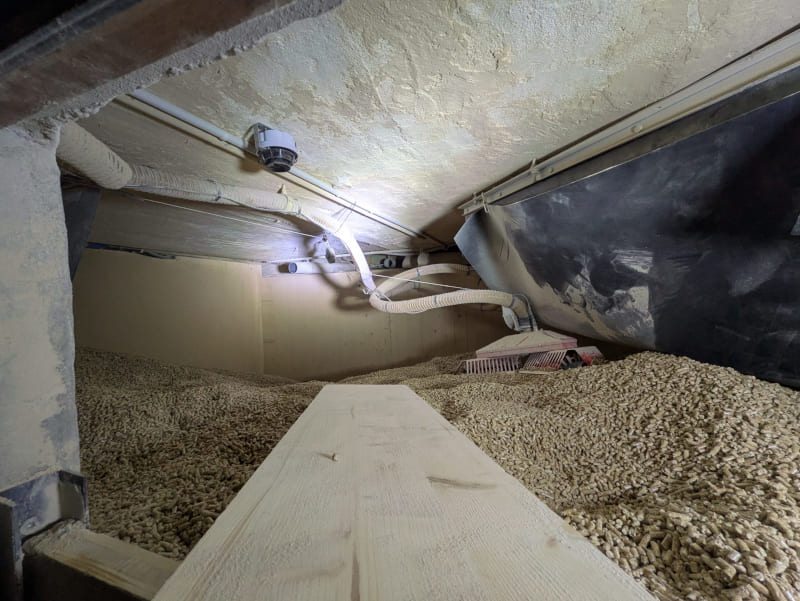
Pellets are a solid product: measurement is performed using a radar sensor (ATEX) from the top of the silo. A pressure or ultrasonic sensor, which is suitable for liquids (fuel oil, LPG), is not suitable for a pellet silo.
This data is sent to the platform Deskplatform, the monitoring interface designed for operators. There, Guignard can view the status of all monitored silos on a single screen: current level, consumption trends, and configurable alert thresholds. Whereas the distributor previously had to contact its customers or send a technician, it can now access this information remotely.
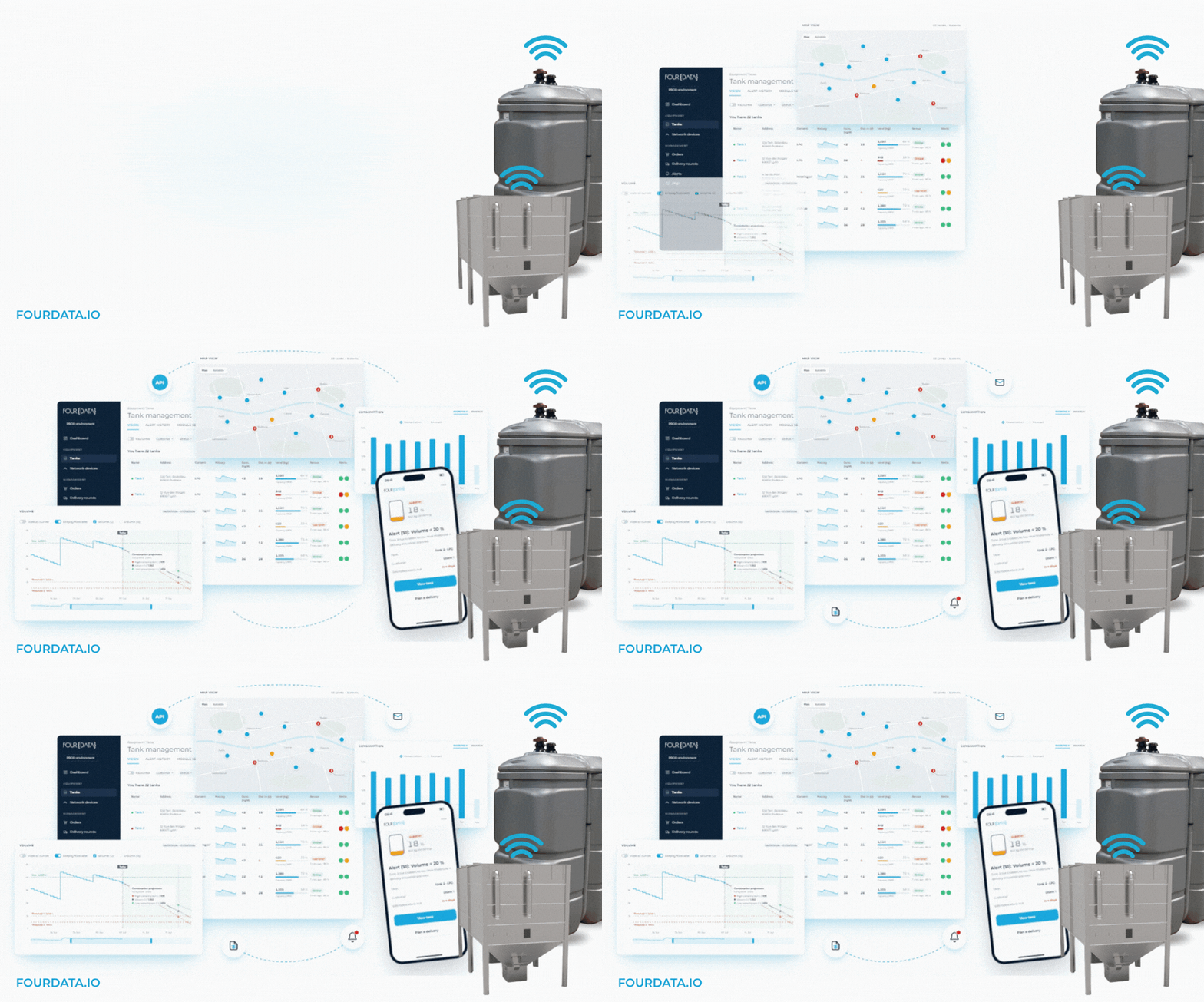
The complete connected pellet inventory tracking chain—from the silo to the delivery truck
The difference lies in the complete solution. FOUR DATA doesn’t just sell a sensor—it integrates the sensor, connectivity, platform, and support. That’s what sets its approach apart from competitors who offer only hardware or only software. In practice, this means having a single point of contact from the silo all the way to the dashboard. This is also what Société Guignard has taken away from this first season: “One of the strengths we’ve noticed is the quality of the after-sales service. The teams are knowledgeable, responsive, and provide us with effective support whenever we need it.”
How Guignard Manages Its Daily Supply Chain
“We’ve been using Four Data’s solutions since last winter, and this initial phase has proven very successful,” says Alan Guignard. The most tangible change involves how the workday is organized. Thanks to automatic data reporting, teams can monitor multiple facilities simultaneously without having to call customers or visit the sites. In the morning, a quick glance is all it takes to identify silos or tanks nearing their capacity limits and plan a logical route.
According to Alan Guignard, the main benefit observed is the simplification of operational management. Centralized monitoring makes it possible to quickly identify sites requiring delivery, prioritize operations based on actual needs, and load trucks to match demand as closely as possible. In other words, field data becomes a decision-making tool for logistics, not just a simple indicator.
“On a day-to-day basis, Four Data sensors make it easier for us to manage multiple clients at the same time. Remote level monitoring streamlines our operations and helps us better anticipate supply needs.”
— Alan Guignard, Guignard Company
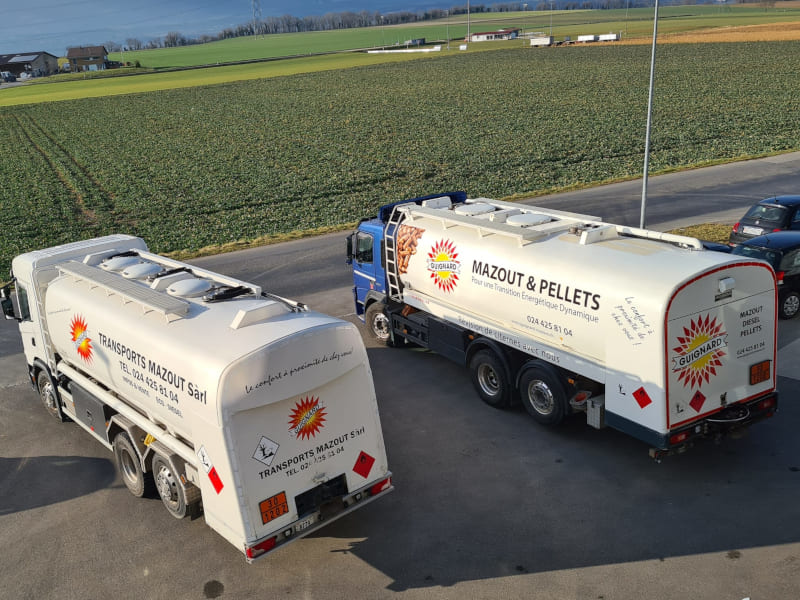
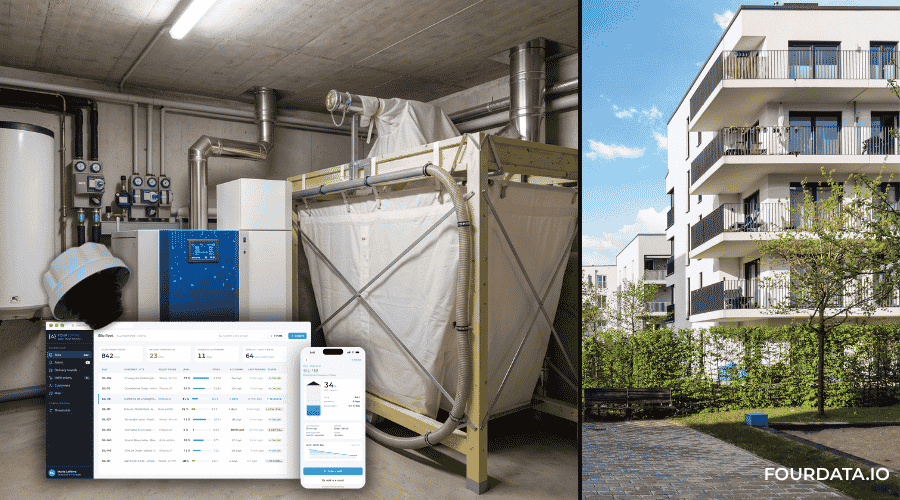
Guignard’s delivery routes are now based on the actual levels of the silos as tracked
The nature of planning is also changing. Rather than reacting to a notification, Guignard plans deliveries before inventory levels reach critical thresholds. It secures its supplies, reduces emergencies, and improves the fill rate of its delivery routes—three factors that directly impact delivery costs.
How can you monitor the level of a pellet silo remotely?
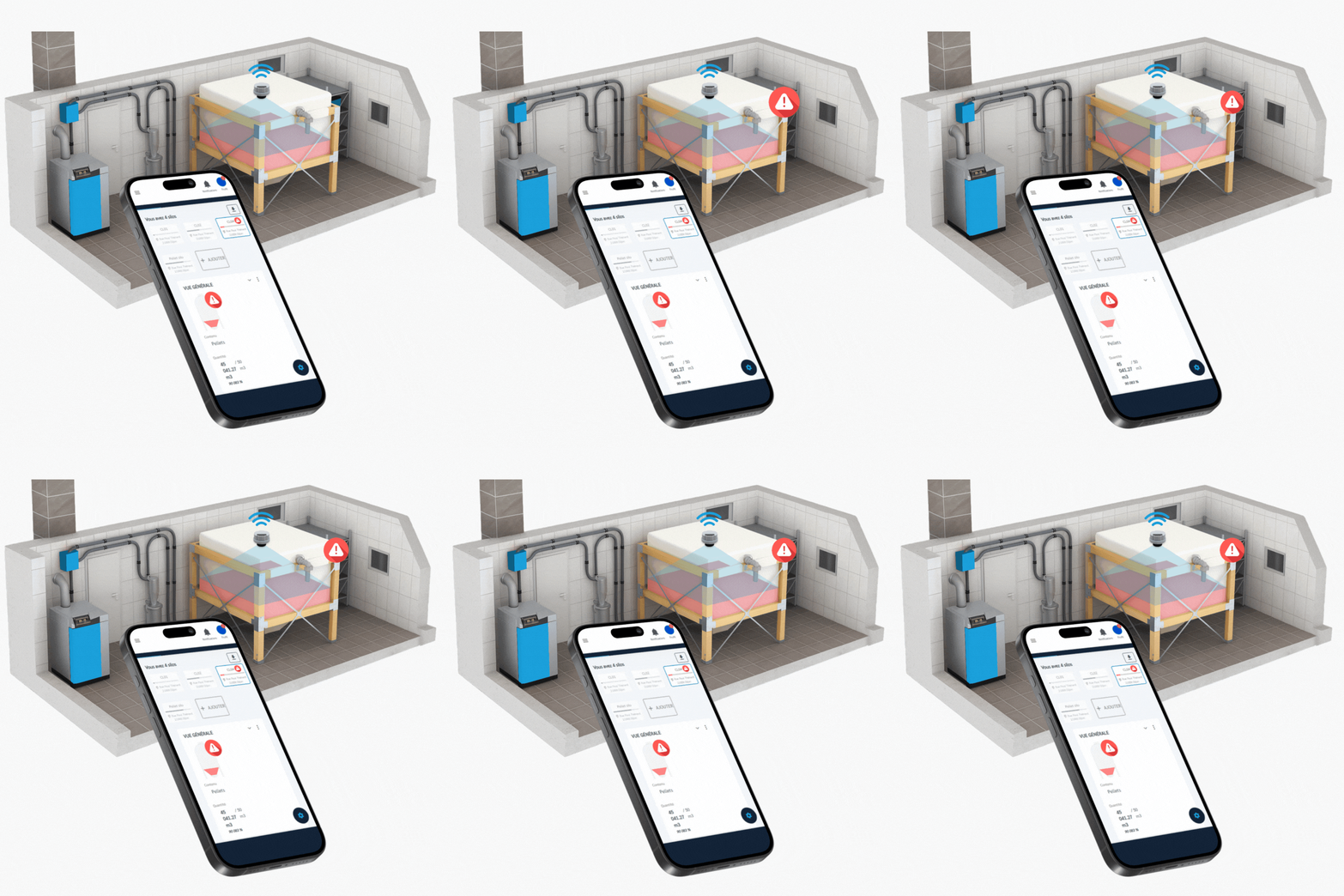
A connected radar level sensor is mounted at the top of the silo and measures the height of the pellets without physical contact. For tanks, depending on the available access points, either ultrasonic or pressure sensors can be installed. The sensor sends its readings at regular intervals to a monitoring platform. The distributor can then remotely monitor the levels of all its silos and tanks, receive threshold alerts, and schedule deliveries based on real-time data.
Reassured end customers, a distributor with a better reputation
Connected monitoring isn’t just beneficial for logistics. For the end user, it eliminates a chore: no more need to check their silo or tank or worry about running out of fuel in the middle of winter. According to Guignard, its customers appreciate this peace of mind—the distributor keeps an eye on things and alerts them before they run out.
“The feedback from our customers has been very positive,” confirms Alan Guignard. “They particularly appreciate the reliability and convenience of connected inventory management. Thanks to this visibility, they no longer have to worry about tracking their pellet or heating oil levels and place their full trust in us to manage their supplies.”
This convenience strengthens the business relationship. A customer who has never experienced a supply disruption—who receives their delivery on time without even thinking about it—remains loyal. For an energy distributor, where competition hinges as much on service as on fuel prices, this perceived reliability becomes a key differentiator.
The connected pellet silo level sensor is not just an internal tool—it’s a visible service that the distributor provides to its customers.
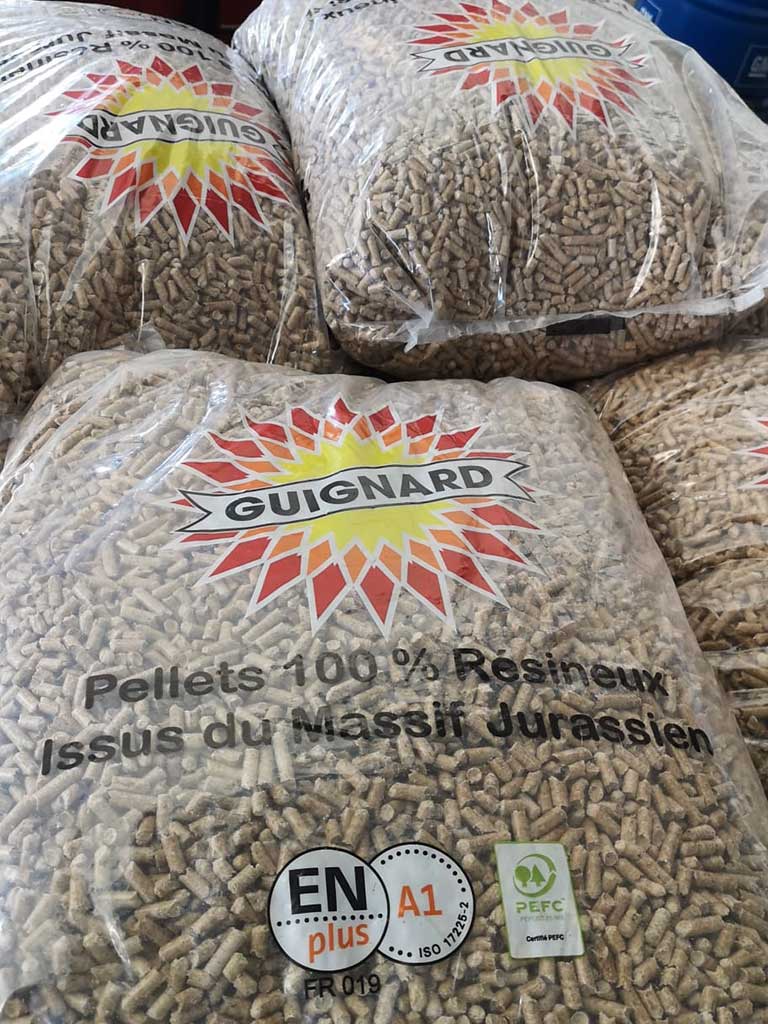
From the bag to the silo: Pellets, a fuel whose consumption varies greatly depending on the weather
Next step: connected depots
Monitoring customer silos is only part of the equation. Guignard also focuses on monitoring its own warehouses.
“Since our offices are not located directly at the storage sites, being able to monitor inventory levels and warehouse activity remotely would be a significant advantage in optimizing our management and further improving our responsiveness.”
— Alan Guignard, Guignard Company
The principle is the same as on the client side: a sensor measures the warehouse level, the data is sent to the platform, and the teams can plan restocking without having to travel. For a distributor, connecting the warehouse means closing the loop—from production to the customer’s silo, every link in the chain becomes visible. This is the role of the connected warehouse in the FOUR DATA offering, which complements the monitoring of customer installations.
From the pellet silo to the heating oil tank: a connected local ecosystem
Pellets are only part of the story. The Guignard Group also deals in heating oil and fuels, and, most importantly, it manages the link that most distributors outsource without a second thought: the storage tank itself.
That link is Belet Citernes SA, a company affiliated with Guignard and based in Penthalaz in the canton of Vaud. Belet handles all types of work related to heating oil and diesel tanks:
- new installation, maintenance, decommissioning;
- leak detection, sewer repair;
- retention pond lining, self-supporting polyester shells;
- tanks made of steel, polyethylene, or polyester.
Its service area covers Vaud, Geneva, Neuchâtel, and Fribourg. In other words, when a customer in the region installs or maintains a tank, Belet is the one who gets their hands dirty.
Expert Tip
The best time to install a smart gauge on a tank is during installation or maintenance—when the tank is already open and a professional is on site. Incorporating the sensor installation into the routine work avoids the need for a separate service call.
This proximity is a game-changer for telemetry. Whereas a traditional distributor must schedule a dedicated service call to install a sensor, the Guignard-Belet ecosystem can integrate it into routine operations. The approach that has proven effective for pellet silos naturally extends to fuel oil tanks: a level sensor, the same monitoring via Desk, and the same ability to plan deliveries in advance.
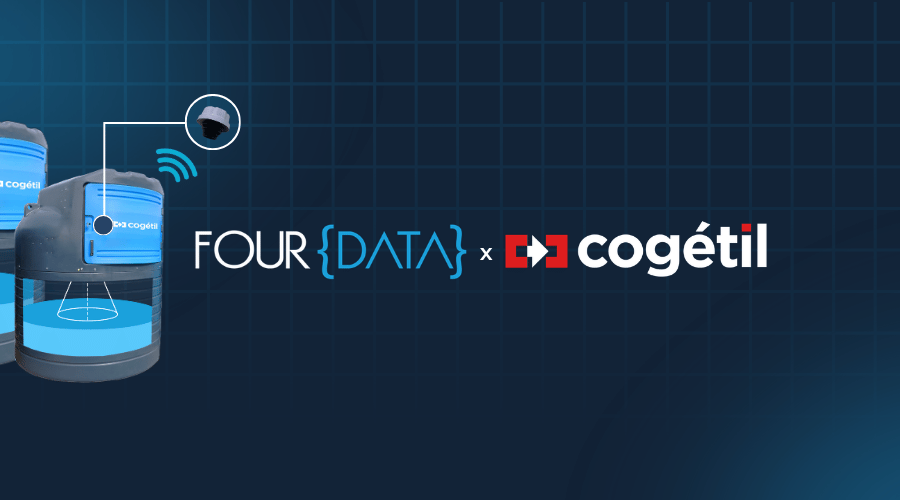
That’s where the chain comes full circle locally—for the end customer, a single regional point of contact handles the storage tank, data, and fuel, from pellets to heating oil:

The Swiss Market Is Still Open
Telemetry for pellets is still in its infancy in Switzerland—and Guignard sees “many opportunities for growth ” there: “The added value provided by Four Data sensors is a real asset in enhancing our offerings and meeting the market’s growing expectations. ” Consumer expectations are shifting toward greater service and transparency, and distributors who digitize their tracking systems are gaining a competitive edge. Guignard’s experience illustrates a fundamental shift: wood heating is becoming more professional in its logistics, just as the heating oil market did before it.
The system has been proven effective for heating oil and LPG; it offers the same benefits for pellets—fewer unnecessary inspections, more efficiently utilized delivery routes, and early detection of stockouts.
FAQ — Connected Monitoring of Pellet Silos
Monitor Your Pellet Silos Remotely
Guignard has chosen to manage its inventory based on actual levels rather than estimates. The result: early deliveries, optimized delivery routes, and customers who no longer have to keep an eye on their silos.
If you distribute pellets, heating oil, or fuels in Switzerland and want the same level of visibility into your fleet, let’s talk. David Rotaru, our Key Account Manager for Switzerland, Germany, and Austria, is familiar with the challenges of the Lake Geneva region and the DACH market.
You may also be interested in these articles :