Tank telemetry: how remote supervision optimizes delivery rounds
Summary
- What is industrial telemetry?
- The real gain: removing one truck in ten
- From visibility to optimization: four levels of maturity
- Chemistry, environment, hydrogen: the new fields of telemetry
- The connectivity challenge: from cellular to satellite
- Investing in the IoT: start with the business case
- FAQs
- From visibility to optimization
6 min reading – Published June 2, 2026
Contents
A fuel oil or LPG distributor who manages several thousand tanks works for a long time in the dark. Rounds are planned on the basis of average consumption, not actual levels. The result is well known to all operators:
- trucks that leave half-full;
- customers on the run who call in urgently;
- miles traveled for nothing.
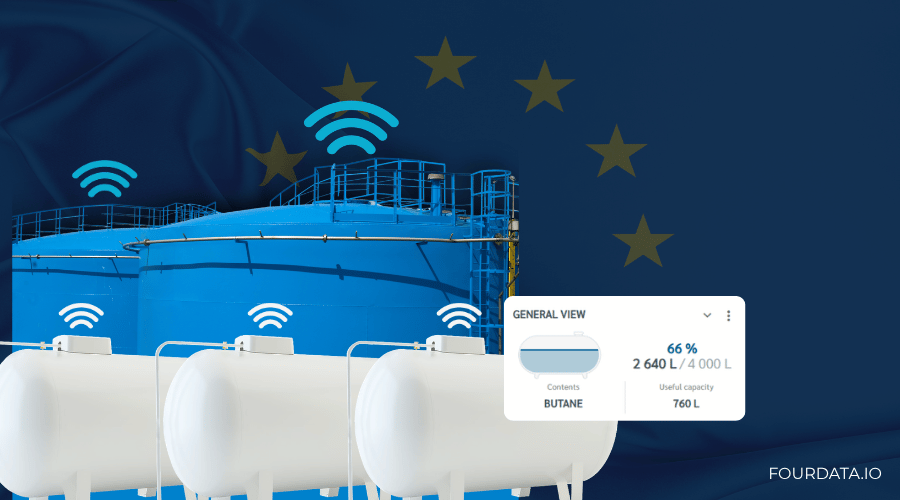
Telemetry changes this equation by making each tank visible from a distance.
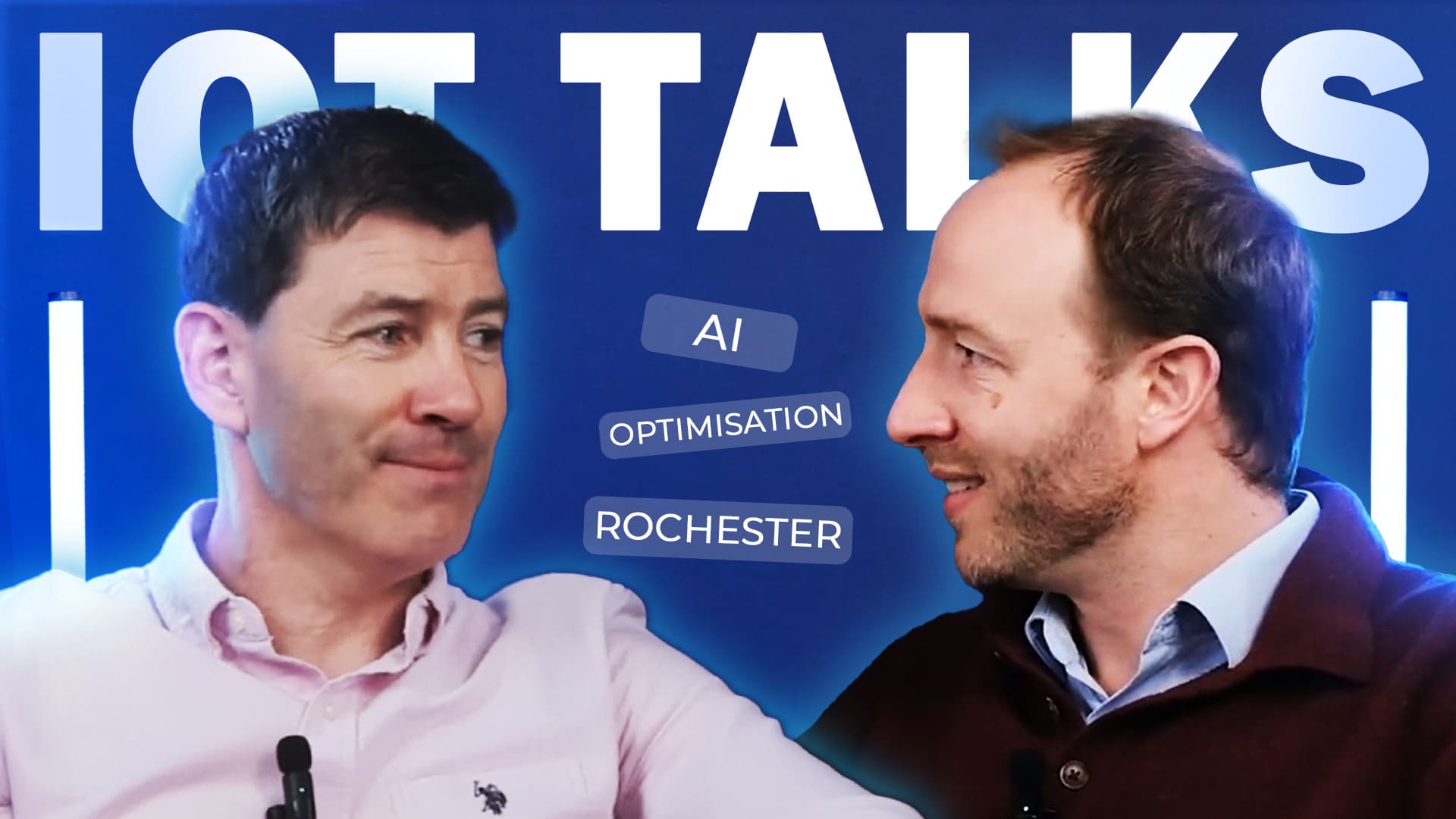
For our podcast, François Clément, FOUR DATA’s Sales Director, spoke with Oliver McCarthy, General Manager of Tekelek (Rochester Sensors Group), which tracks over 6.5 million sensors in service. His feedback from the field confirms a point observed on FOUR DATA’s own deployments: telemetry is not a technical gadget, it’s a measurable lever for logistics optimization.
Key figure
On a fleet of 10 trucks serving 5,000 tanks, equipping the fleet with telemetry often enables 1 truck to be taken off the road – i.e. 10% of transport capacity redeployed without investing in a new vehicle.
Full interview: François Clément (FOUR DATA) × Oliver McCarthy (Tekelek / Rochester Sensors).
What is industrial telemetry?
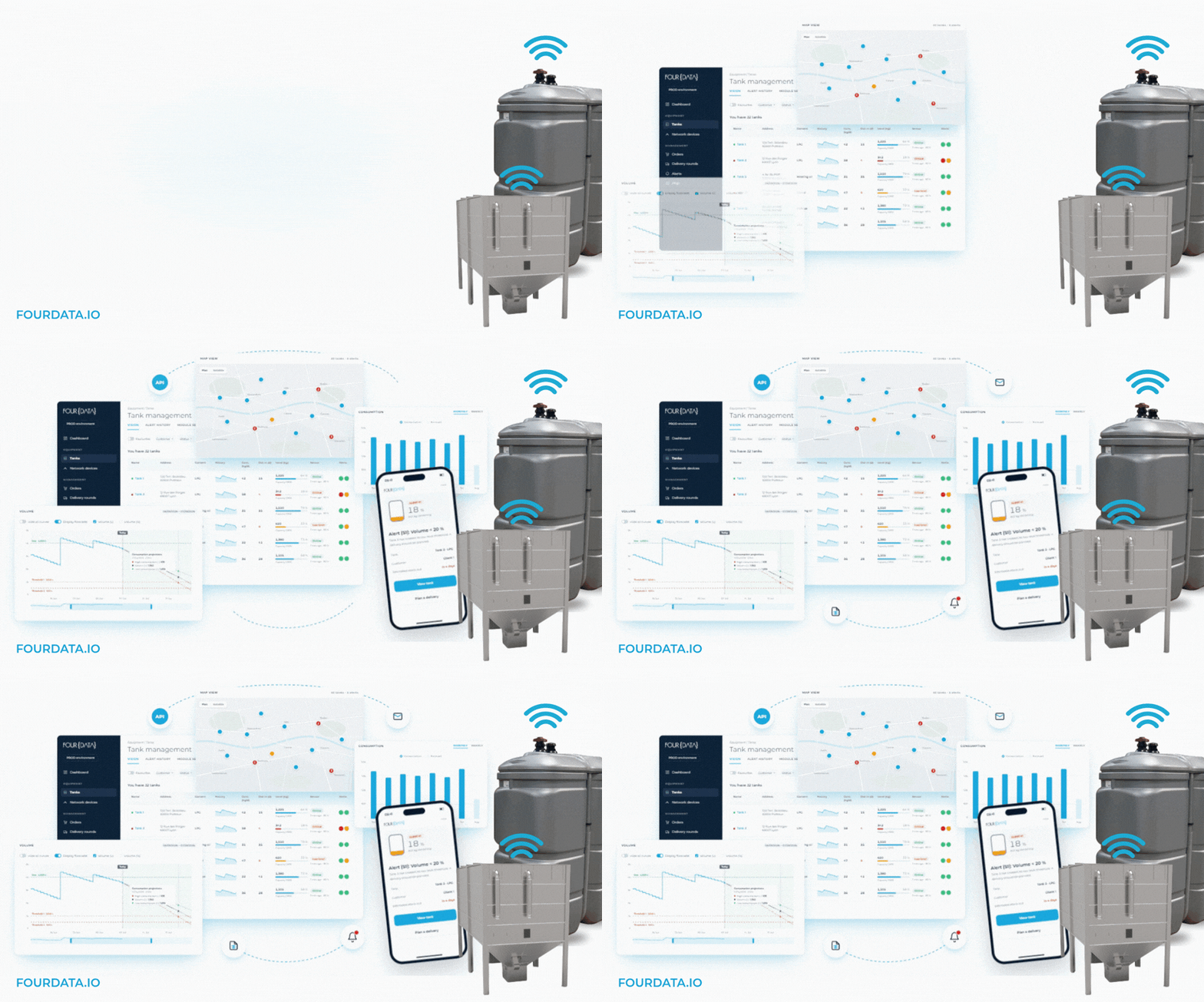
Industrial telemetry involves remotely measuring the status of a piece of equipment – tank level, pressure, temperature – then transmitting this data to an online platform. A sensor collects the data in the field, a network transmits it to the cloud, and the operator can monitor his entire fleet without having to move.
Oliver McCarthy sums up the mechanics simply: retrieve data from a remote asset – a fuel, gas or chemical tank – and send it to the cloud. The value, however, lies not in the sensor, but in what the data can be used to decide.
The telemetry chain: from the sensor on the tank to logistics decisions
The real gain: removing one truck in ten
The example given by Oliver McCarthy speaks directly to distributors. Take an operator with ten trucks on the road, serving five thousand tanks. By equipping as many of these tanks as possible with a sensor, he gains visibility over his entire field fleet.
And with this visibility, he can often remove a truck from his fleet. Telemetry becomes a business optimization tool, not just a remote gauge.
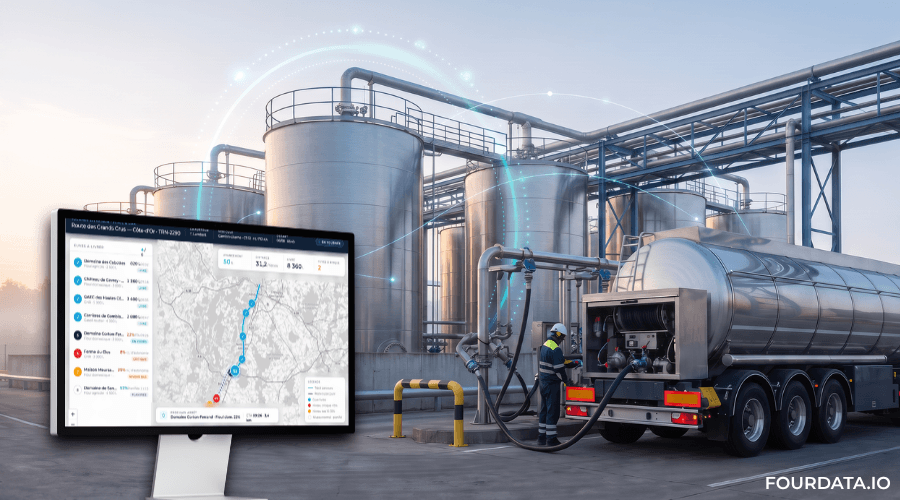
This is exactly what the Desk platform from FOUR DATA: it centralizes the levels of all the tanks in a fleet, and prioritizes tours according to actual urgency. Instead of visiting a customer whose tank is still at 70%, the scheduler prioritizes those who are approaching the critical threshold.
Benefits at a glance
More delivery capacity without expanding the fleet – fewer empty runs, fewer kilometers and fewer unnecessary interventions, thanks to planning based on actual levels rather than averages.
From visibility to optimization: four levels of maturity
Not all operators expect the same from data. There are four levels of use, from the simplest to the most advanced:
- See – find out from a distance what’s happening in the field.
- Be alerted – anticipate breakage or overflow thanks to configurable thresholds.
- Optimize – transform data into tour planning.
- Stand out from the crowd – offer your own customers a white-label connected platform, which FOUR DATA’s Sens platform makes possible.
Oliver McCarthy illustrates the power of the “visibility” level with a striking figure: one of their major LPG accounts operates over one hundred thousand equipped tanks, and can indicate at any time of the day the quantity of product present in the field. This remote inventory knowledge has become a management advantage in its own right.
Figures quoted in the Tekelek interview × FOUR DATA
Chemistry, environment, hydrogen: the new fields of telemetry
LPG was one of the first sectors to adopt telemetry, followed by heating oil. These markets are reaching a certain level of saturation. Oliver McCarthy identifies two growth drivers, both of which coincide with FOUR DATA’s priorities.
The first is chemicals. An IBC filled with chemicals can be worth several hundred thousand euros: the business case for monitoring it is much stronger than for a fuel oil tank. The second is theenvironment – water, wastewater, septic tanks – where a European regulation currently in preparation could require certain installations to be monitored.
Note
The higher the value of the asset monitored, the greater the justification for supervision. A chemical IBC costing several hundred thousand euros radically changes the profitability calculation compared with a simple fuel oil tank.
FOUR DATA is already active in these areas, monitoring lubricants, AdBlue and industrial fluids, supervising waste and methanization, and monitoring hydrogen. On this last point, FOUR DATA has designed a complete solution: HytubeTrack, an ATEX solution dedicated to hydrogen tube trailers and MEGCs, which measures pressure and temperature continuously.
The connectivity challenge: from cellular to satellite
The main obstacle to industrial IoT isn’t the sensor, it’s the network. Oliver McCarthy is clear on this point. LoRa and Sigfox have had limited success; cellular has largely won the day, but is facing the retreat of older technologies.
In France,ARCEP confirms that 2G and 3G networks will be phased out between 2026 and 2029. However, NB-IoT and LTE-M are not yet deployed everywhere, creating areas without usable coverage. For a sensor installed on a buried tank or in a white zone, the choice of connectivity is therefore decisive.
Today, three families of solutions coexist:
Attention
2G and 3G networks will be phased out in France between 2026 and 2029 (ARCEP). A sensor that depends on them will become mute: check that your equipment is based on future-proof technologies before any deployment.
Oliver McCarthy believes that satellite will eventually replace cellular for this type of use. Tekelek is testing a product capable of automatically switching from the terrestrial network to satellite in the event of a connection failure.
This is precisely the direction taken by FOUR DATA, whose 2026 roadmap includes NTN connectivity. For its international sensors, FOUR DATA already relies on its partner 1NCE, whose coverage extends to 173 countries, and offers the creation of a private on-site network for complex installations.
Investing in the IoT: start with the business case
When asked what advice he would give to a company looking to equip itself, Oliver McCarthy’s answer is straightforward: understand your return on investment before taking the plunge. How many rounds avoided, how many breakages anticipated, how many hours of manual surveying eliminated. Without this calculation, an IoT project remains an expense; with it, it becomes a manageable investment.
Artificial intelligence is also part of this calculation, but as a concrete tool, not as an argument. Tekelek uses it to validate firmware code or model use cases, like a thinking partner.
Expert advice
Before any deployment, we carry out a needs analysis and a network coverage test: data is only of value if it is reliably transmitted. This is what transforms an installed sensor into usable information.
FAQs
From visibility to optimization
Seeing your tanks remotely is just the beginning. The real value comes when the data drives your rounds, anticipates breakages and feeds your information system. FOUR DATA designs and manufactures its sensors, masters connectivity and operates its Desk and Sens platforms: a complete chain, from field to decision.
Or ask for a demonstration of the Desk platform to visualize your park in real-life conditions.
Article based on an interview conducted by François Clément, Sales Director at FOUR DATA, with Oliver McCarthy (Tekelek / Rochester Sensors). Published on June 2, 2026.
You may also be interested in these articles :