
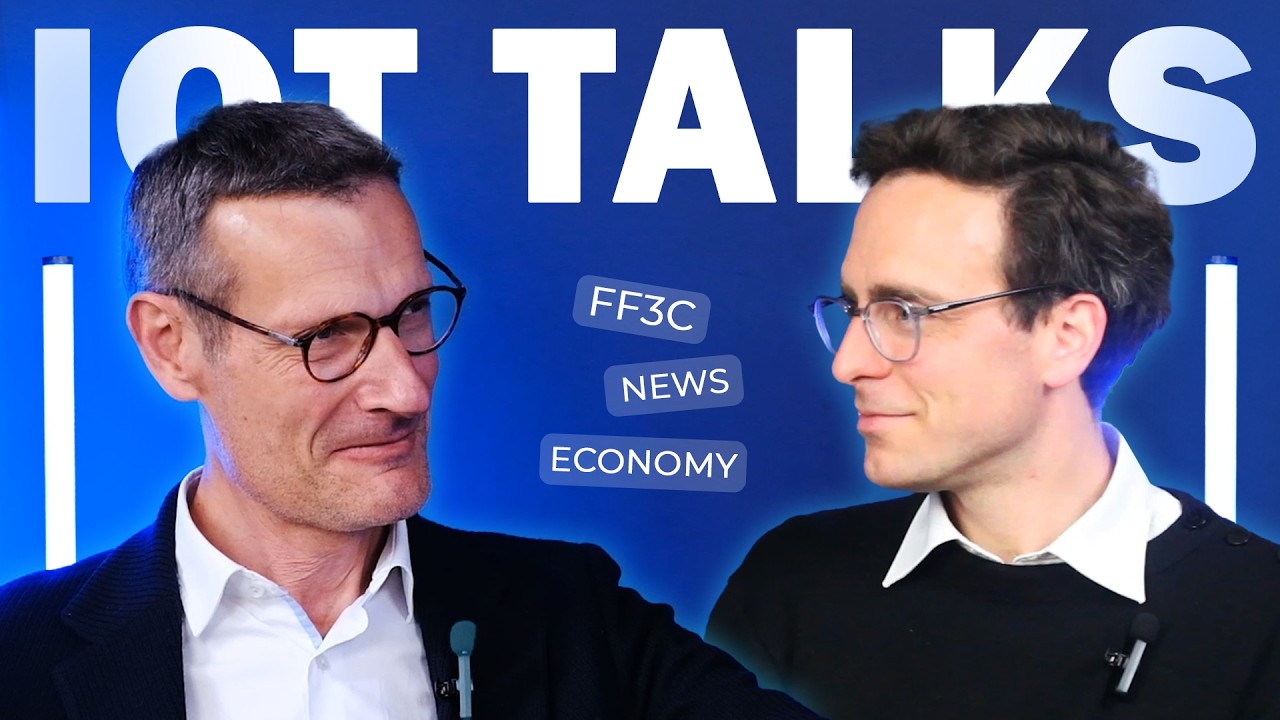
“A Successful Energy Transition”: An Interview with Emmanuel Ampaud, President of the FF3C
Summary
- What is the FF3C?
- From the Field to the Presidency: Emmanuel Ampaud’s Journey
- Fuel Prices: Protecting Customers Without Sacrificing Retailers
- F55 Biofuel, Pellets, Heat Pumps: A Commitment to Diversification
- “If we know their fuel consumption and can prevent them from breaking down, we’ve come full circle.”
- The FF3C Roadmap: Technological and Logistical Neutrality of Regions
- What FOUR DATA took away from this discussion
- FAQs
- Manage your tank fleet the way Emmanuel Ampaud manages his supply chain
9-minute read · Published on July 6, 2026 · Updated on July 6, 2026
Article written by Yann de la Roche Saint André, CEO of FOUR DATA, as part of the FOUR DATA podcast.
Contents
- What is the FF3C?
- From the Field to the Presidency: Emmanuel Ampaud’s Journey
- Fuel Prices: Protecting Customers Without Sacrificing Retailers
- F55 Biofuel, Pellets, Heat Pumps: A Commitment to Diversification
- “If we know their fuel consumption and can prevent them from breaking down, we’ve come full circle.”
- The FF3C Roadmap: Technological and Logistical Neutrality of Regions
- What FOUR DATA took away from this discussion
- FAQs
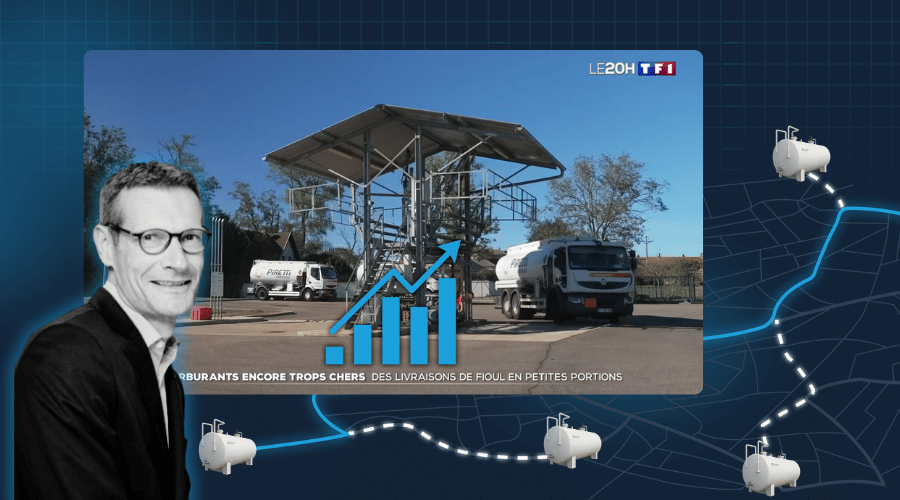
Fuel prices are on the rise again, energy taxation is undergoing a transformation, and home heating oil remains a hot-button issue in public debate. To gain some perspective, we spoke with Emmanuel Ampaud, president of the FF3C and CEO of Piretti Energies in Dijon.
A distributor with 25 years of experience in the field, he is a firm believer that the energy transition will succeed through technology neutrality and the maintenance of local logistics—not through mandates. An interview with a neighbor from Burgundy who knows our industry inside and out.
Key Figure
The FF3C brings together approximately 1,000 companies—many of them family-owned—that deliver heating oil, motor fuels, GNR, wood pellets, and heating services throughout France.
L'épisode complet avec Emmanuel Ampaud, président de la FF3C — podcast FOUR DATA
What is the FF3C?
The FF3C (French Federation of Fuels, Motor Fuels, and Heating) is the national trade association for off-grid energy distributors. It represents approximately 1,000 companies—many of which are family-owned—that deliver heating oil, motor fuels, GNR, wood pellets, and heating services to end consumers throughout France.
Contrary to the image of major oil companies, FF3C members do not refine or explore for oil. They are wholesalers and mid-sized companies that deal directly with customers:
- carriers
- public works
- government agencies
- farmers
- individuals
“We are companies dedicated to supplying energy to local communities,” summarizes Emmanuel Ampaud. “The entire region is crisscrossed by companies capable of delivering a few liters of fuel—whether GNR or diesel—to the end consumer. ” At FOUR DATA, we see the extent of this regional network with every deployment: our sensors are installed in everything from regional depots to isolated storage tanks in rural areas.
From the Field to the Presidency: Emmanuel Ampaud’s Journey
Emmanuel Ampaud’s career began far from Burgundy. After attending business school, he went on a work assignment to Argentina at Total Austral, a Total subsidiary specializing in exploration and production. Upon his return, rather than joining one of the major Parisian corporations, he chose to work for the family business in Dijon. “I came for a few months, just to try it out. As it turns out, I’ve been here for twenty-five years now.”
Over the past twenty-five years, Piretti Energies has kept pace with market changes: from coal to heating oil, then on to fuels, biofuels, and wood-based energy. The company expanded its heating maintenance and installation services before acquiring Nord-Est Climatisation and Nord-Est Énergie in Dijon, both specialists in heat pumps. This diversification is representative of what most French distributors are experiencing.
Emmanuel Ampaud joined the FF3C’s executive committee about twenty years ago and held nearly every position there before being elected president. “The FF3C has given me so much. I figured it was time to try to give something back, in my own small way.”
Fuel Prices: Protecting Customers Without Sacrificing Retailers
In response to soaring prices, the president of the FF3C is fighting on two fronts.
The first issue concerns customers. The union participates in government meetings and calls for support measures: farmers have received substantial aid since May, while, according to the union, transporters continue to receive insufficient support.
The second issue concerns the distribution companies themselves. Rising prices are straining cash flow and automatically increasing the risk of non-payment. The FF3C has long been calling for the ability to recover excise taxes in cases of permanent non-payment—an issue that has been stalled for years, but for which a window of opportunity may finally be opening.
Myth vs. Reality
Myth: Retailers are “profiting” from the price crisis.
Fact: Studies show the opposite— distribution margins tend to decline when prices rise. This is a point that even Jean-Marc Jancovici has highlighted, noting the proportion of taxes in the price at the pump compared to the marginal share accounted for by distribution.
This pressure on cash flow has a direct impact on operators: every unnecessary delivery and every underloaded route costs more than before. This is precisely where inventory data changes the equation.
Heating oil or gasoline distributor? Let’s discuss the monitoring of your tank fleet.
F55 Biofuel, Pellets, Heat Pumps: A Commitment to Diversification
Many end customers wish to keep their oil-fired heating systems, due to poor insulation, remote location, or the lack of a viable technical alternative. The industry’s solution is called bio-heating oil.
F30, which contains 30% rapeseed esters, is the mandatory fuel for new boilers installed since July 1, 2022. The next step is underway: the certification of F55, a fuel derived primarily from biomass. “This is the first step, and a truly very important one,” insists Emmanuel Ampaud.
As for heat pumps—often seen as the enemy of heating oil—the president of the FF3C takes a pragmatic stance. “If we let our customers slip away to heat pump sellers who are really just selling tax credits, we’re going to cause some damage.”
His answer: to personally support the customer whenever a heat pump is a viable option, using high-quality equipment, ensuring a meticulous installation, and providing reliable after-sales service. The distributor is becoming a multi-energy provider —and its need for inventory management is growing accordingly.
“If we know their fuel consumption and can prevent them from breaking down, we’ve come full circle.”
Digital transformation is taking hold in the sector, “just as AI will, and much faster than we ever imagined.” Emmanuel Ampaud describes three concrete stages of this process, moving beyond abstract discourse.
First,embedded computing: it has helped distributors improve delivery safety and traceability, with increasingly efficient GPS systems for drivers. Next, ERP systems: today’s tools enable detailed queries and sales alerts directly on the customer record. Finally, connected level monitoring —and this is where he cites FOUR DATA as an example: “Connected level monitoring, whether for fuel oil tanks or pellet storage, allows us to anticipate needs and provide an absolutely unprecedented level of service to our customers.”
“To be a good salesperson, you have to know your customers well. If, in addition to knowing them well, you understand their usage patterns and help them avoid service outages, you’ve come full circle.”
— Emmanuel Ampaud, president of the FF3C
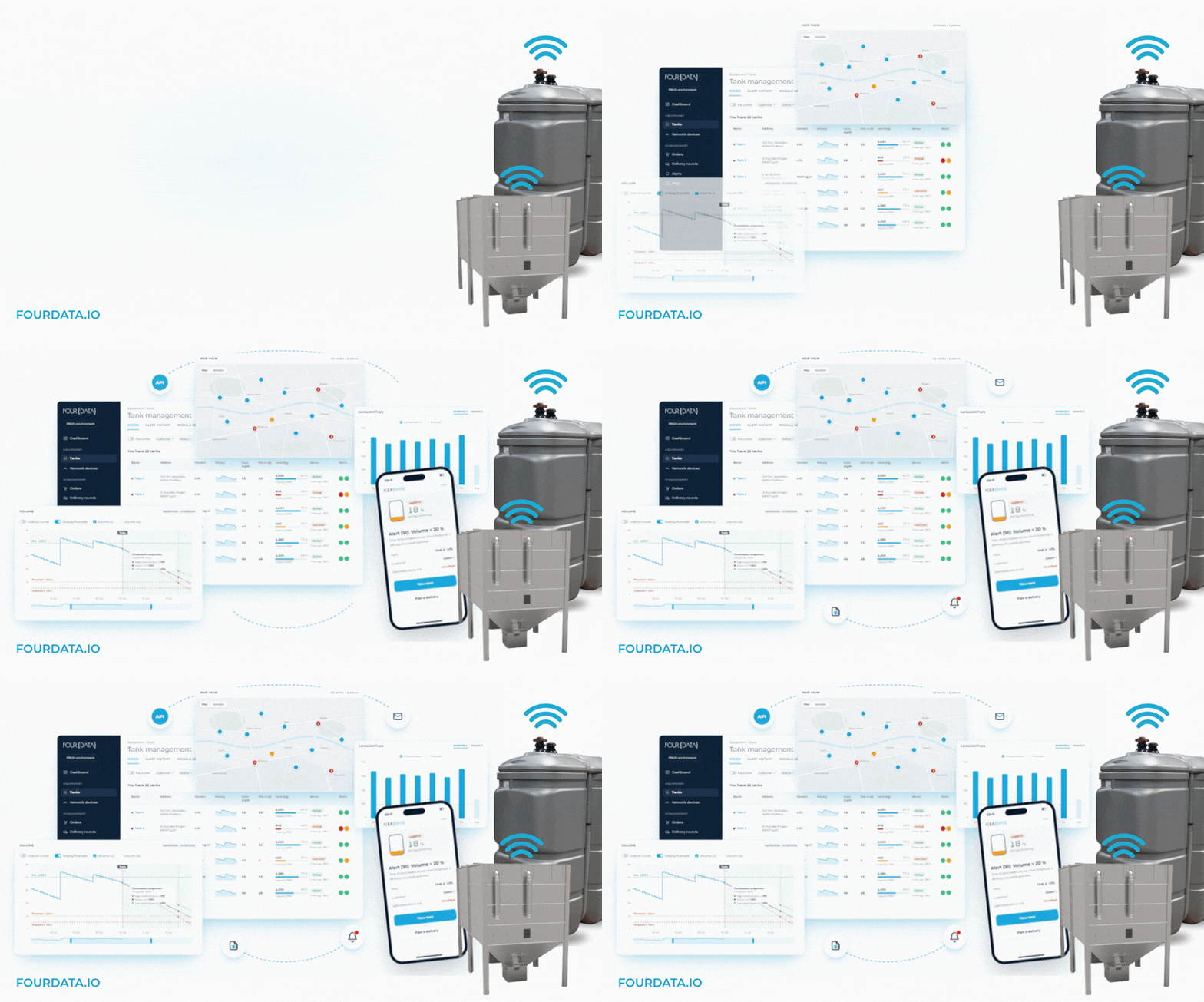
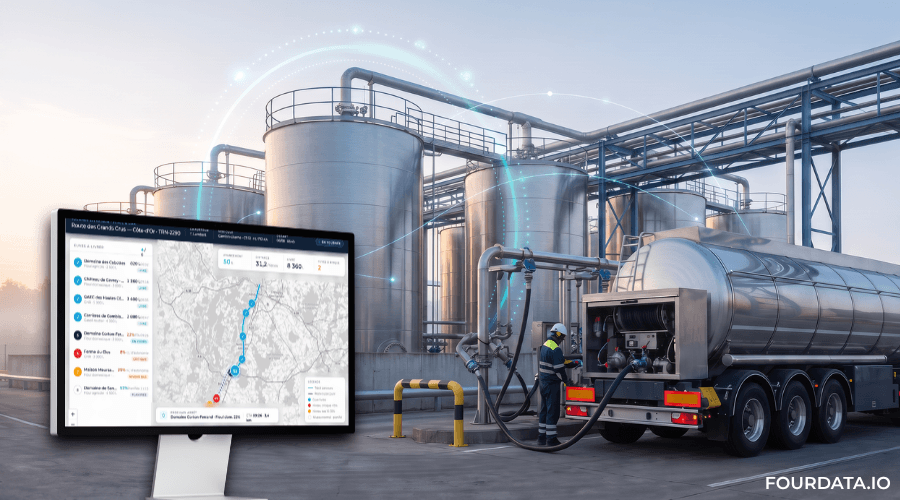
In practice, this is exactly what a FOUR DATA smart fuel gauge does: the sensor measures the tank level several times a day, the Desk monitoring platform calculatesthe remaining fuel life, and the distributor schedules a delivery before the tank runs dry—at the time that best fits into the delivery route.
The FOUR DATA Connected Gauging Loop — From Tank Level to On-Time Delivery
Of the approximately 80,000 sensors we have deployed across Europe, this scenario plays out every winter at retailers of heating oil, GNR, and wood pellets.
The FF3C Roadmap: Technological and Logistical Neutrality of Regions
When asked about the direction for the next three to five years, Emmanuel Ampaud replies without hesitation: “a successful energy transition.” In other words: stop portraying the transition as an impending disaster and place our trust in technological progress—provided it is accompanied by genuine technological neutrality.
He gives two examples. First, the automobile: all-electric vehicles fall short for some uses, while advances in internal combustion engines and the advent of biofuels make it possible to decarbonize existing technologies. Next, housing: rather than imposing a single solution, we should focus oninsulation and materials, since what ultimately matters is the number of kilowatt-hours consumed.
His message to public officials can be summed up in one sentence: “Technical solutions devised in Paris don’t necessarily work in every region.” Livestock farmers, farmers, and rural residents will continue to need gasoline, biofuels, and heating oil for decades to come.
Warning
Without supporting measures, the basic logistics network —primary and secondary distribution centers, delivery trucks, rural gas stations—will disappear. And with it,the vitality of these regions.
What FOUR DATA took away from this discussion
Three key insights emerge from this interview, which align with what we observe in the field.
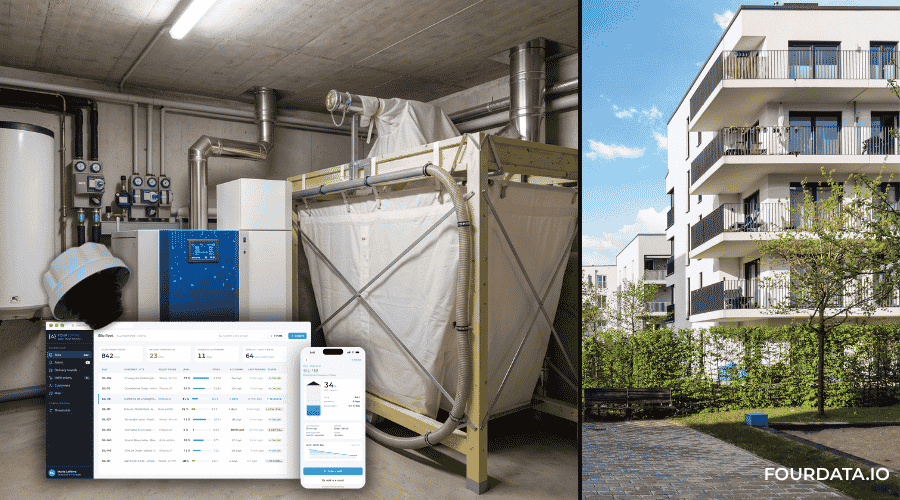
First, consumption data becomes a business asset for the distributor: knowing the levels in customers’ tanks helps build loyalty and ensures timely deliveries. Second, diversification (biofuel, pellets, heat pumps) increases the number of storage types that need to be monitored—fuel tanks, pellet silos, storage facilities—and makes a case for a single platform rather than a separate tool for each energy source.
Our solutions for monitoring fuel oil tanks and GNR tanks are perfectly aligned with this multi-fluid approach. Finally,optimizing delivery routes is no longer just a convenience but a matter of economic survival as distribution margins shrink.
FAQs
Manage your tank fleet the way Emmanuel Ampaud manages his supply chain
Whether you’re a distributor of heating oil, fuel, or pellets, the cycle the FF3C president refers to begins with reliable data on the tank level. Request a demo of the Desk platform and see how 80,000 FOUR DATA sensors are already helping European energy providers deliver at the right time.
Do you have a larger project? Talk to us directly.
Article written by Yann de la Roche Saint André, CEO of FOUR DATA, as part of the FOUR DATA podcast, featuring Emmanuel Ampaud, president of the FF3C and executive at Piretti Energies (Dijon).
You may also be interested in these articles :