Around 100 drivers on Belgian roads every day, thousands of tanks to monitor and a heating oil market that is tightening. For Proxifuel, a TotalEnergies subsidiary, tank telemetry has become an everyday working tool. Sales Manager Thijs De Schoenmacker looks back on about 10 years of use and on the recent migration of its sensors to the Four Data platform.
His verdict fits in one sentence: the migration happened without ever losing sight of customers’ levels. The rest of the interview explains why that matters so much to a distributor.
Video interview
Thijs De Schoenmacker on tank telemetry at Proxifuel
Proxifuel (TotalEnergies) × Four Data
The full interview. This article covers its key points.Open on YouTube →
Key takeaways
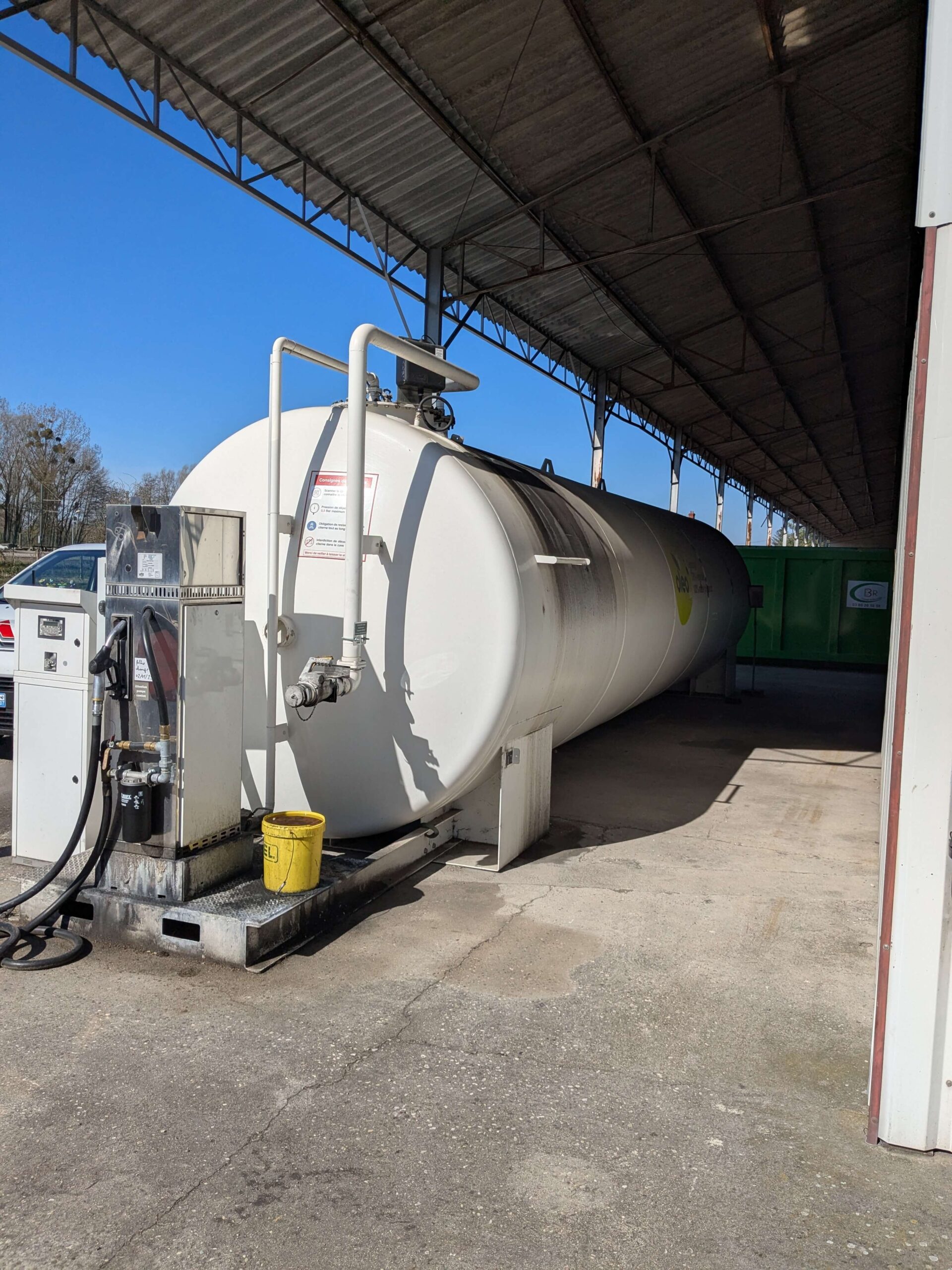
Proxifuel delivers bulk fuel by truck, all over Belgium, with around 100 drivers.
Tank telemetry has been in use there for about 10 years, first as a customer service, then as a logistics lever.
The sensor migration to the Four Data platform went through with no interruption in level monitoring and no late deliveries.
Most appreciated feature: the consumption-based alert, useful for professional customers with irregular needs.
Next step hoped for: automating order creation in the distributor’s software.
Proxifuel, a fuel distributor present across the whole chain
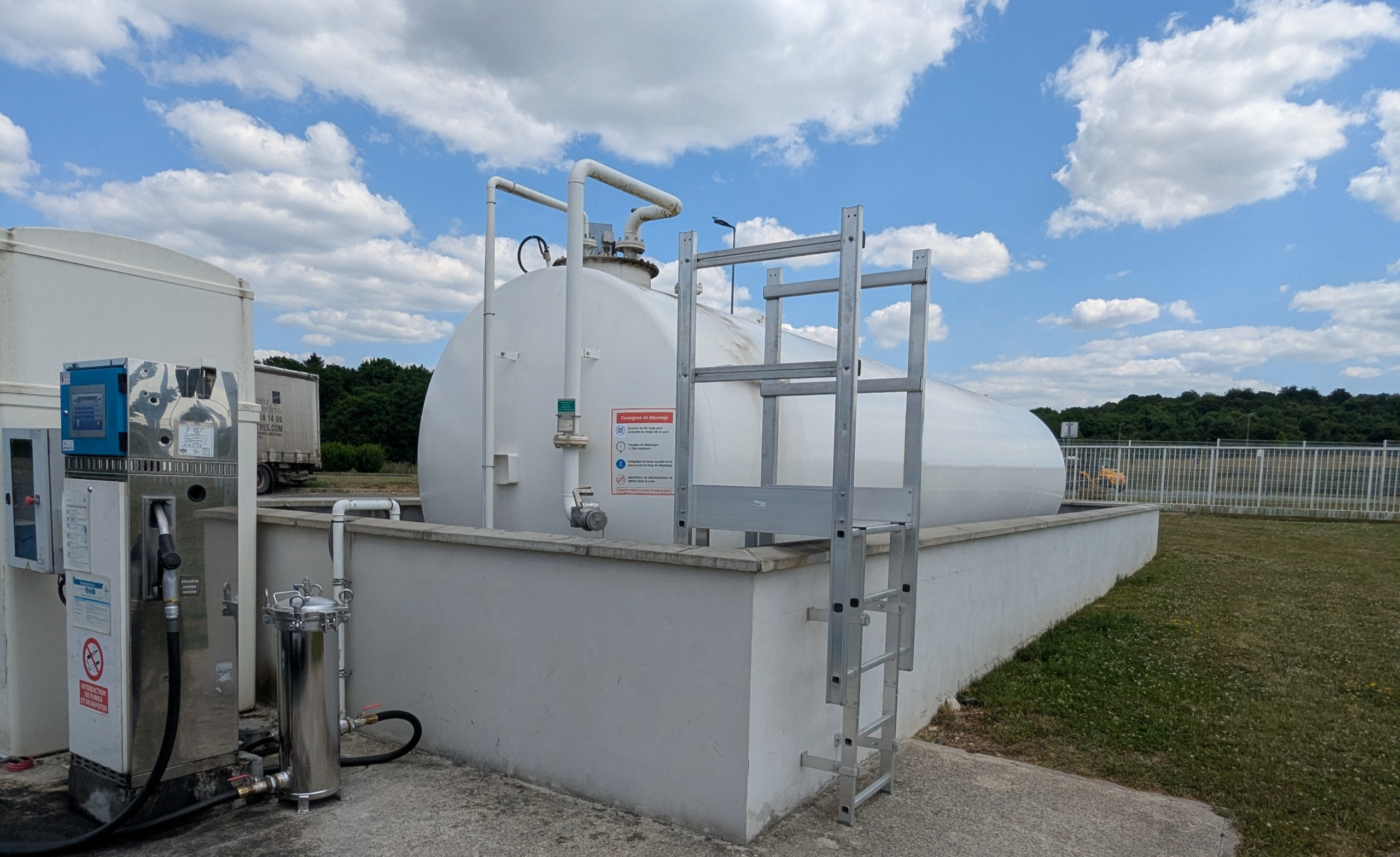
Proxifuel sells and distributes bulk fuel, delivered by truck straight to the customer’s installation, across the whole of Belgium. The company belongs to TotalEnergies, and that is what sets it apart, according to Thijs De Schoenmacker.
“We are a producer, we are a refiner, and we distribute the products all the way to the customer. In that respect, we are the only player on the Belgian market present across the whole chain.”
Thijs De Schoenmacker, Sales Manager at Proxifuel
Key figures
≈ 100
drivers on Belgian roads every day
≈ 10 years
of tank telemetry in use
0
loss of visibility of levels during the migration
Day to day, the promise is easier to state than to keep: deliver on time, with good service and good support. Proxifuel positions itself as the partner that takes several concerns off its customers’ hands:
stock monitoring;
tank management;
regulatory and site safety matters.
Telemetry is part of that support.
A consolidating heating oil market, but not one without a future
The Belgian market is consolidating. There are fewer and fewer players, and household demand is changing.
“When young people buy a house that still has a heating oil tank, they won’t necessarily keep it. They will renovate and switch energy source.”
Thijs De Schoenmacker, Sales Manager at Proxifuel
Thijs De Schoenmacker is not writing off the business, though. He expects a different market in five or 10 years, not necessarily a less interesting one. Professional customers will always need fuel to keep their business running, and this is the segment where the opportunities lie.
Myth vs. reality
Myth: the decline of heating oil spells the end of the business. Reality: it shifts the value towards professionals, where tank data is most useful.
This reading has a direct consequence for the tools. When the number of domestic tanks falls and professionals weigh more, every delivery has to be better planned. That is exactly where remote fuel level monitoring comes in.
What is tank telemetry?
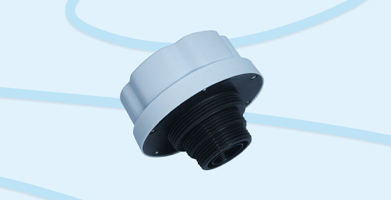
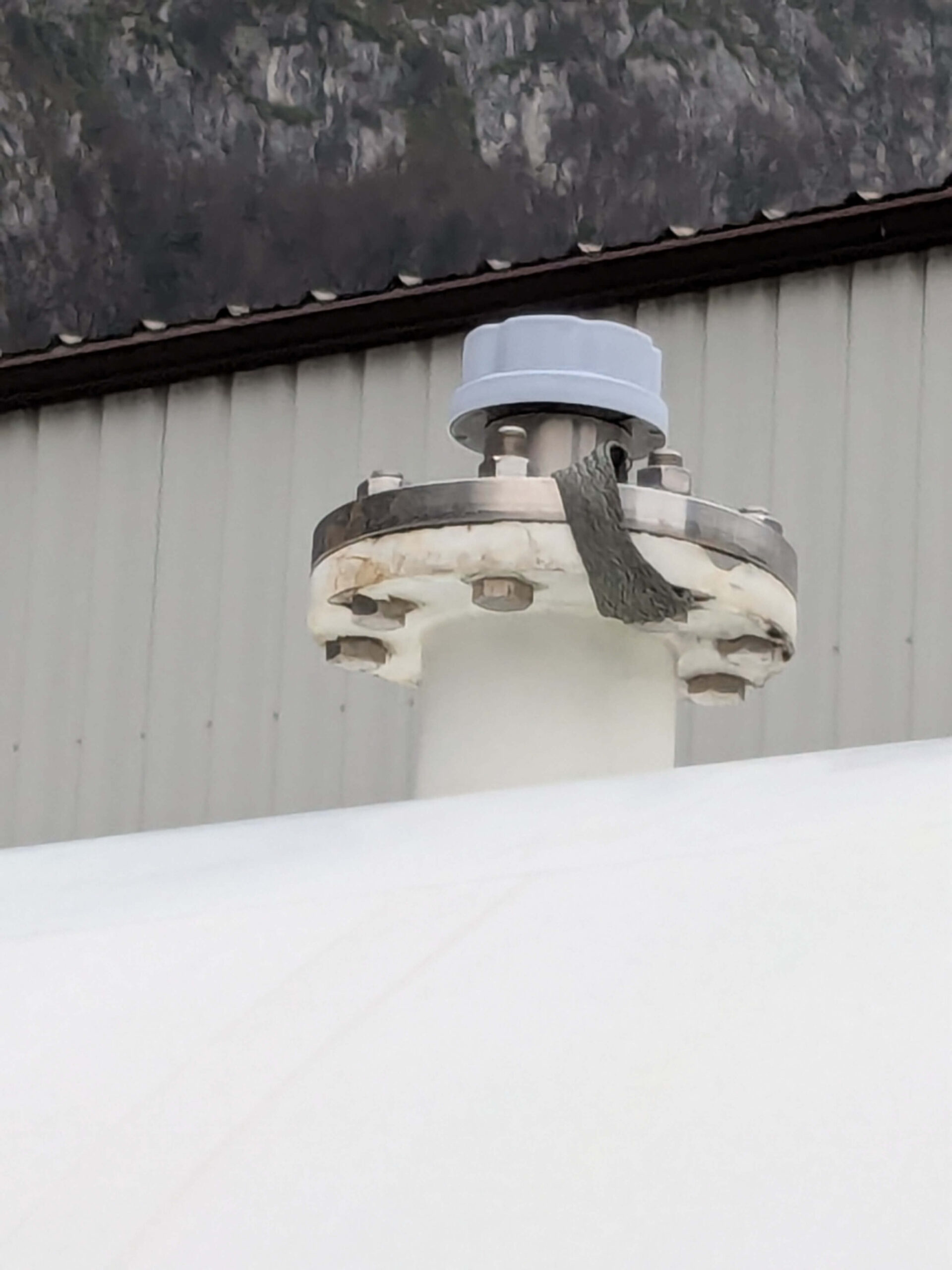
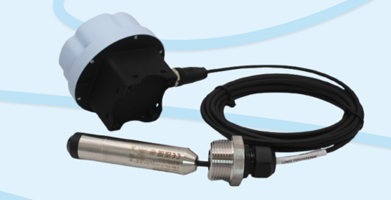
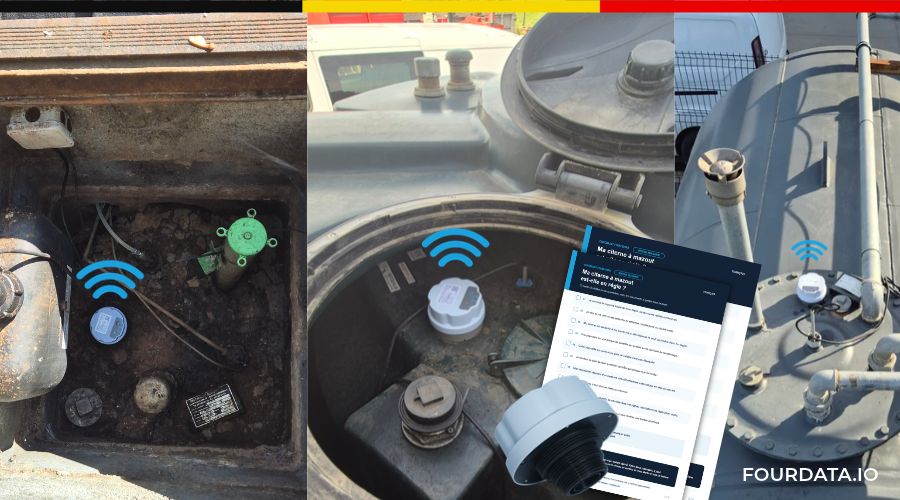
Tank telemetry means measuring a tank’s level remotely with a connected sensor, which sends its readings to a supervision platform. The distributor tracks its customers’ stock without travelling, receives alerts and plans deliveries before a run-out.
At the customer’s site
Tank
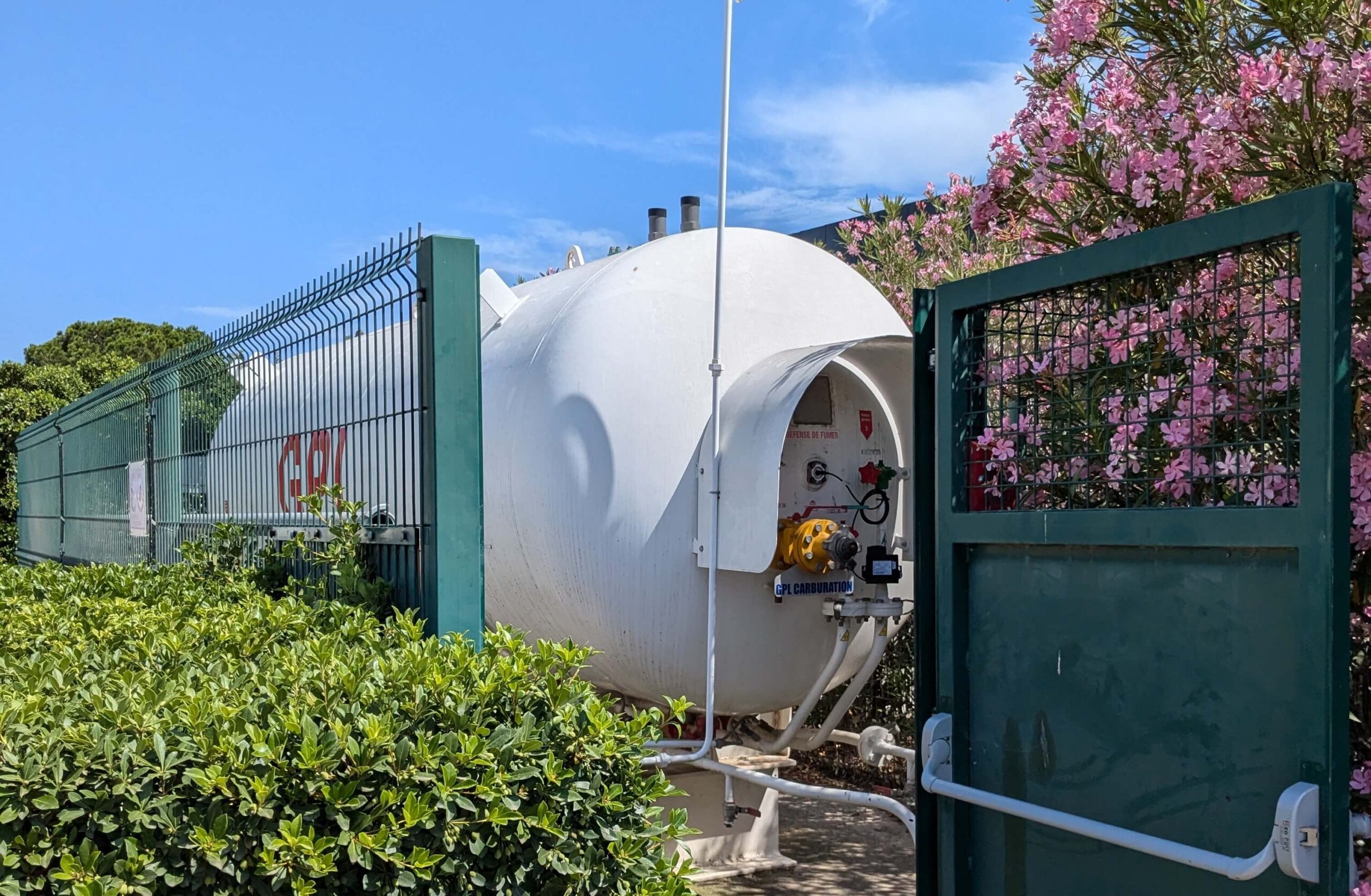
heating oil, diesel or another fuel
→
Measurement
Connected sensor
reads the level remotely
→
Data
Platform
supervision and alerts
→
Decision
Distributor
delivery planned before a run-out
How tank telemetry works, from measurement to delivery
In the field, people also talk about a connected gauge or a connected tank. The principle is the same whether the tank holds heating oil, diesel or another fuel.
10 years of tank telemetry at Proxifuel: from customer service to logistics
Proxifuel did not discover telemetry with Four Data. The company has been using it for about 10 years, and its view of the tool has changed along the way.
“At the very beginning, it was mainly a tool that relieved customers of monitoring, and perhaps also a way to build customer loyalty. Then we saw the logistics benefit, and I think we haven’t yet used it to 100%.”
Thijs De Schoenmacker, Sales Manager at Proxifuel
So two uses overlap:
For the customer: no need to watch the tank or remember to order. The distributor takes care of it.
For the distributor: dispatchers check tank levels every day to build the delivery schedule.
Advantage at a glance
The candour is worth noting. After 10 years of practice, a player of this size still feels it has room to improve on the logistics side. For a distributor just starting out, that is rather reassuring: the gains do not run out after the first year.
Migrating the sensors to the Four Data platform: no loss of visibility
Attention
Changing telemetry platform is daunting for an obvious reason. If levels disappear from the screen for a few days, the delivery schedule goes blind and customers risk running dry.
Nothing of the kind happened at Proxifuel.
“
At no point did we lose sight of the levels, which in the end is the most important thing. We were always able to track the remaining levels and deliver to our customers on time.
Thijs De Schoenmacker, Sales Manager at Proxifuel
The sensor switchover was led by Théophile, a sales representative at Four Data, who supported Proxifuel’s teams throughout the operation. Thijs De Schoenmacker does not hide that it took some getting used to: the teams had to adapt to the new Four Data supervision platform. They also found features there that they did not have before.
The consumption alert, the feature that stood out for the teams
Asked what the platform has brought that is new, Thijs De Schoenmacker first mentions the consumption-based alert.
Standard alert
The low threshold
It is triggered when the tank drops below a threshold.
Waiting for the low threshold sometimes means reacting too late.
Consumption alert
The unusual behaviour
It reacts to unusual behaviour: a tank emptying much faster than usual over a day.
Being warned on the day of the peak leaves time to reorganise a delivery round.
“We have quite a few professional customers whose consumption is very volatile. If there is suddenly heavy consumption in a single day, it is important to be alerted so we can anticipate the next delivery.”
Thijs De Schoenmacker, Sales Manager at Proxifuel
For a construction site, a farm or a haulier, consumption is anything but linear.
Next step: automating the order
Today, the efficiency gain relies on dispatchers who check the levels and create the orders. Thijs De Schoenmacker is looking further ahead.
“If one day we could even automate placing the order in our software, that could save us a bit of time too.”
Thijs De Schoenmacker, Sales Manager at Proxifuel
The point raised by Proxifuel is being addressed with the Four Data teams. The feature already exists on the platform: it is the order proposal, which works in two ways.
Proposal to validate: with the complete system, or from a threshold set by the distributor, an order proposal is pushed to the end customer, who validates it according to the available delivery slots.
100% automatic management, run entirely by the distributor: level threshold reached → order triggered and validated by the distributor → sent to the ERP to allocate volumes by truck and by sector → route optimisation.
That leaves the last link in the chain, route optimisation. Four Data is working on a dedicated plug-in, available directly in Desk.
The Sales Manager says he appreciates being listened to and expects the platform to keep evolving, with features that could also benefit end customers.
What fuel distributors can take away
Four lessons emerge from this interview for any fuel distributor in the oil and gas sector weighing up tank telemetry:
01
Telemetry starts as a service and ends up as a logistics tool.
Customer loyalty is the first visible benefit, the delivery schedule is the most lasting.
02
A platform migration is judged on one criterion: continuity of level monitoring.
The rest can be learned.
03
Professional customers warrant finer alerts than a simple low threshold.
Their consumption is irregular.
04
The decline of heating oil does not spell the end of the business.
It shifts the value towards professionals, where tank data is most useful.
“We hope to keep working with Four Data for a long time.”
It is the remote measurement of a tank’s level by a connected sensor, which sends its readings to an online platform. The distributor or operator checks levels without travelling and receives alerts before stock runs out.
It serves two purposes. It relieves customers of monitoring their tank, which builds loyalty. It also gives dispatchers a daily view of levels to plan deliveries. At Proxifuel, these two uses have coexisted for about 10 years.
Not necessarily. When migrating its sensors to the Four Data platform, Proxifuel reports that it kept visibility of levels at all times and delivered to its customers on schedule.
It is a notification triggered by abnormally high consumption over a short period, a single day for example. It complements the low-level alert and suits professional customers whose needs vary widely.
Yes, according to Proxifuel. Households are gradually switching energy sources, but professional customers still need fuel for their business. This is the segment where remote tank monitoring matters most.
Migration or first rollout
Do you distribute fuel and want to know what a migration or a first telemetry rollout would mean for your teams?