
Heating oil delivery profitability: coping with split orders
Summary
12 min read · Published 14 October 2026 · Updated 16 October 2026
- 01Why small heating oil deliveries cost distributors more
- 02What the TF1 report reveals about new buying behaviour
- 03Strategic reserves and off-road diesel aid: the state acts on price, not on the round
- 04Three knock-on effects on operations
- 05What a connected gauge changes when customers split their orders
- 06What we see at distributors already equipped
- 07Where to start before the winter peak
- 08FAQ
Domestic heating oil has gone up by nearly 70 cents a litre since the end of last winter. Customers have reacted the way you would expect: they order less each time, wait until the last moment and watch for a price drop.
For a household, that is a way of spreading the bill. For the distributor, it is a logistics equation that keeps getting worse: more stops for the same volume, more emergencies, rounds that are harder to fill.
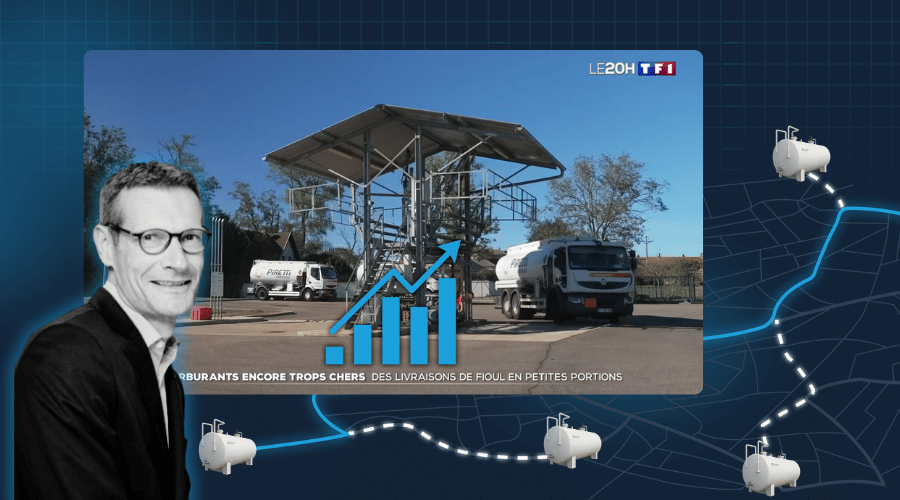
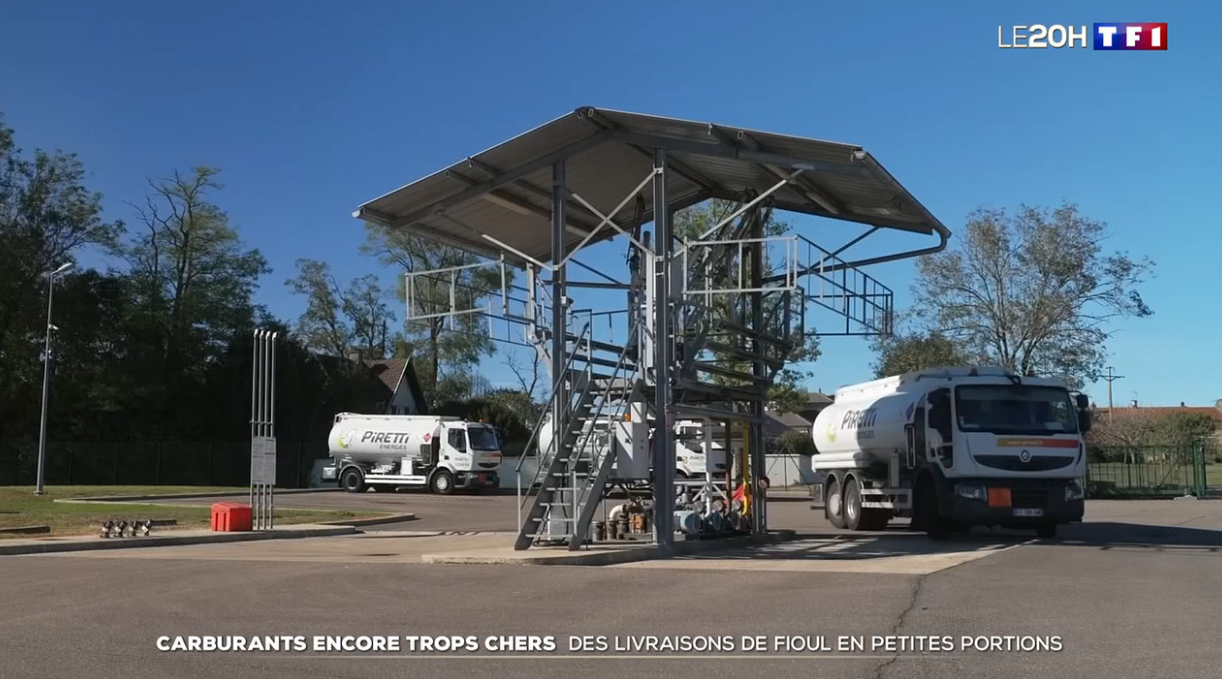
A report broadcast by TF1 in October showed it plainly, with testimony from Emmanuel Ampaud, president of the French fuel distributors’ federation FF3C. This article breaks down the problem and sets out what level data changes in the way rounds are organised this winter.
Key figure
When the average quantity delivered is halved, the logistics cost per litre doubles, while the margin per litre does not move.
Why small heating oil deliveries cost distributors more
A heating oil delivery mobilises the same truck, the same driver and the same administrative time, whether it carries 500 or 1,000 litres. The fixed cost of each stop is therefore spread over fewer litres.
Emmanuel Ampaud summed it up in front of the TF1 cameras: whether you deliver 500 or 1,000 litres to a customer, the administrative and human time stays the same. That observation from the field translates into a simple formula every operations manager knows: the logistics cost per litre equals the cost of a stop divided by the number of litres delivered at that stop.
The cost of a stop covers more items than people tend to think:
- the approach drive, often long in rural areas
- setting up the hose
- discharging the product
- the delivery note
- invoicing
- and sometimes chasing payment
None of these items shrinks when the customer orders half as much.
Note
The industry talks about drop size, the average quantity dropped per stop. It is the first indicator to deteriorate when prices rise.
The pressure does not come from volume alone. Distribution margins tend to fall when crude prices rise, and rising prices squeeze cash flow.
A distributor therefore absorbs more expensive rounds with less financial room for manoeuvre.
What the TF1 report reveals about new buying behaviour
The report follows two delivery drivers working through a series of small-quantity stops, 500 litres here, 300 litres there. Above all it brings out three behaviours that will weigh on rounds until the spring.
The first is partial filling. One retired customer interviewed has a 1,000-litre tank but only has half of it filled, unable to pay for a full tank in one go. He plans to top up in the spring, when the price should be lower.
His reasoning is rational. It also means another visit in the depths of winter.
The second is ordering at the last minute. Customers wait until the tank is almost empty before calling. Every late order shortens the window the distributor has to slot it into a coherent round.
The third is waiting for a price drop. On 7 October the French government announced the release of strategic diesel reserves, with an effect expected in November. According to TF1, domestic heating oil is included in the scheme after all. Some customers will therefore defer their order until then, and then order at the same time.
The company followed by TF1 responded by creating a 300 to 500 litre delivery bracket for the first time. It puts the extra cost of these repeat visits at 200,000 euros by the end of December.
The price context explains the caution. According to weekly DGEC price surveys, a litre of heating oil delivered in the 2,000 to 4,999 litre bracket was worth 1.2250 euros including tax at the end of February 2026. It reached 1.9374 euros on 18 September, its highest level since the series began in January 2020. For small quantities, the price per litre is higher still.
Strategic reserves and off-road diesel aid: the state acts on price, not on the round
Faced with the surge, the French state has pulled two levers. The first concerns strategic reserves. On 7 October the government announced that 10 million barrels of diesel from the reserves managed by SAGESS would be made available to distributors over three months.
The prime minister’s office expects a decrease of 12 to 18 cents per litre from November. Domestic heating oil and diesel come from the same refining cut, which is why the sector also expects an effect on the heating oil price.
The second lever concerns off-road diesel. The 15 cents per litre aid on off-road diesel for farmers has been extended to 31 December 2026. Eligible civil engineering companies benefit from an extended 20 cents per litre support.
Attention
These measures ease the bill for the end customer. They change nothing about the cost of a stop for the distributor, and they even add timing effects to manage.
Heating oil customers are waiting for November to order. Farming customers have an interest in filling their off-road diesel tanks before the aid ends on 31 December. And the release of reserves will finish at the start of 2027, with a risk of prices climbing again and wait-and-see behaviour returning.
For a multi-product distributor, that shapes a stop-start winter: a lull in orders in October, a surge in November on heating oil, a year-end peak on agricultural off-road diesel. Each peak is easier to manage when you know, tank by tank, how much volume is left to deliver and in what timeframe.
Three knock-on effects on operations
More stops for the same volume sold
If a customer uses 2,000 litres a season and now orders in 500-litre lots instead of 1,000, the distributor visits four times instead of twice. The volume sold is identical.
The number of trucks mobilised, driver hours and invoices issued doubles. Multiplied across several hundred customers, it is the capacity of the fleet that gets absorbed by barely profitable stops.
More emergencies, and more expensive ones
A customer who orders at the last minute, with an already low tank, leaves no margin. The slightest delay or cold snap turns into a run-dry.
The emergency is then handled outside the round, with a truck leaving for a single customer and sometimes returning to the same area the next day. It is the most expensive scenario for operations and the most frustrating for the customer.
A deferred, concentrated order peak
Customers waiting for the announced price drop will order within the same window, probably as temperatures fall. The distributor risks going from fragmented activity in October to a concentrated surge in November.
Without visibility on real levels, there is no way to know which customers are genuinely running short and which can wait another week.
Running a heating oil business facing smaller and smaller orders? Let’s look together at how to take back control of your rounds before the winter peak.
What a connected gauge changes when customers split their orders
A distributor cannot force customers to order more. What it can do is stop being at the mercy of the timetable they impose.
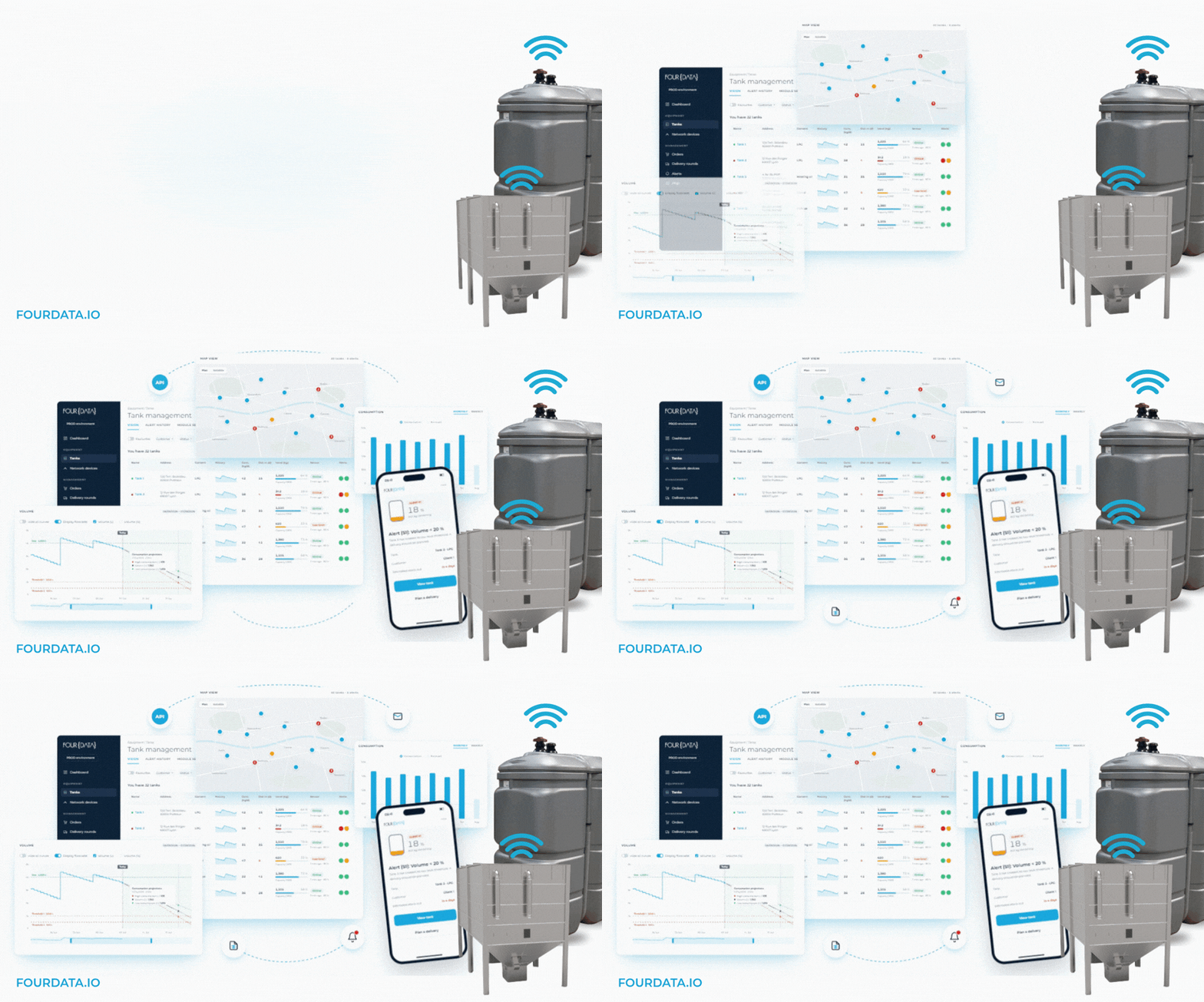
That is the role of a connected heating oil gauge: a sensor fitted to the customer’s tank measures the level several times a day and sends it to a supervision platform.
From the measurement on the customer’s tank to a round built area by area, without waiting for the phone call.
Telling a real need from a wait-and-see order
Two customers calling for 400 litres do not necessarily have the same need. One still has a third of a tank and is trying to spread the spend. The other is a few days from running dry.
With the measured level, the operator knows which one to serve first and which can be slotted into next week’s round.
Calculating the remaining autonomy of each tank
The FOUR DATA Desk platform combines the measured level with recent consumption to estimate the autonomy of each tank in days.
A customer who has just received 500 litres in December no longer drops off the radar: the platform shows when they will fall back below the alert threshold, and the operator schedules them before they call.
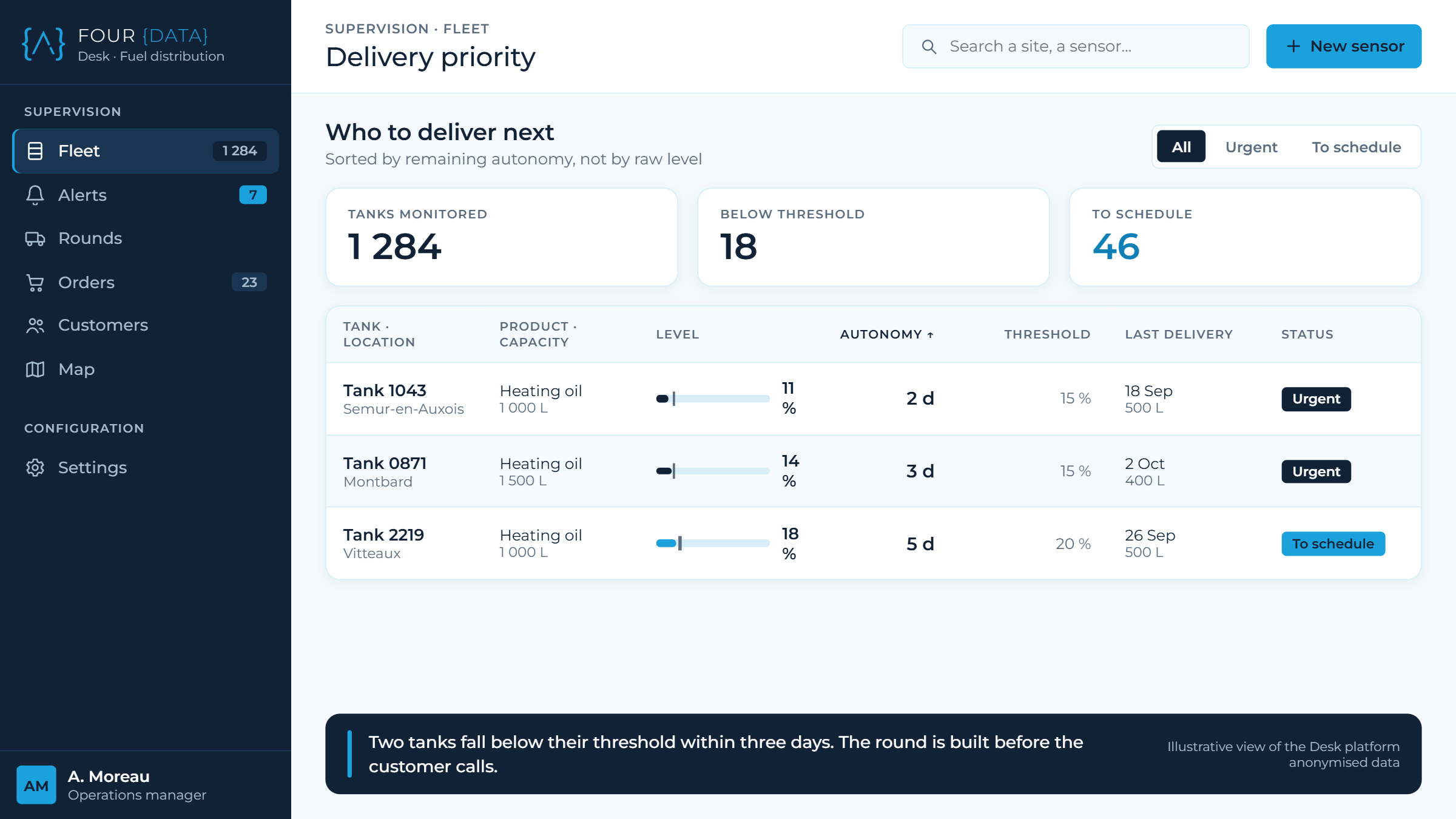
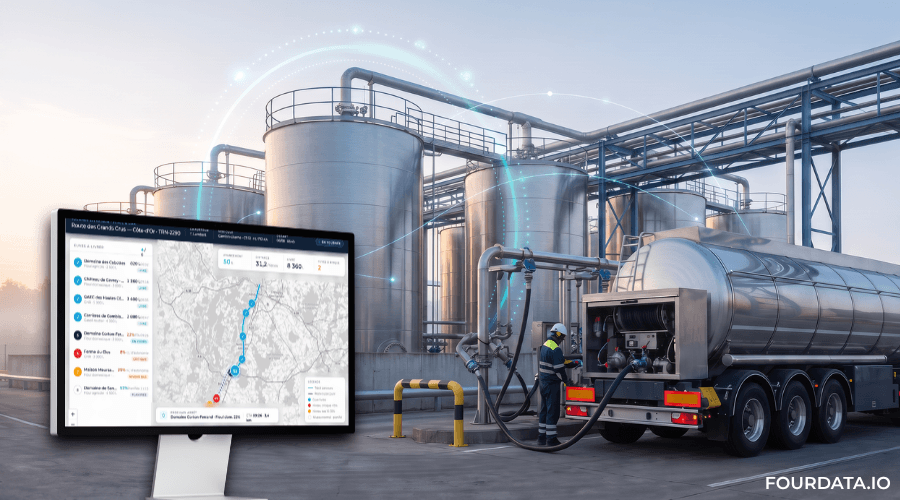
The Desk platform: fleet tanks ranked by delivery priority.
Grouping small deliveries by area
Emmanuel Ampaud says it in the report: rounds will have to be well distributed geographically. Level data makes that objective concrete.
Rather than fifteen scattered emergencies, the operator builds a fifteen-stop round within the same district, anticipating by a few days the customers approaching their threshold. The cost of each stop falls because the approach drive is shared. It is the principle of delivery round optimisation applied to small quantities.
Advantage at a glance
Planned rounds instead of reactive ones: the measured level replaces the customer’s phone call as the starting point for planning.
Preparing for the November peak before it arrives
Across an equipped fleet, the platform shows the free volume in every tank. By adding those volumes up, the distributor estimates the latent demand of customers waiting for the price drop.
Trucks, drivers and depot supply can then be sized before the phone starts ringing.
Offering an arrangement that suits both sides
The customer wants to spread the spend. The distributor wants to deliver profitable quantities. Automatic delivery, triggered by a level threshold and combined with monthly payments, reconciles the two.
The customer pays the same amount every month. The distributor delivers a full quantity when the tank reaches the threshold, within an already planned round.
With Sens, the white-label version of the platform, the customer checks their own level under their distributor’s branding, which cuts down anxious phone calls.
| Criterion | Order on customer request | Delivery driven by the measured level |
|---|---|---|
| Trigger | The customer calls, often late | Autonomy threshold set by the distributor |
| Quantity delivered | Decided by this month’s budget | Matched to the free capacity of the tank |
| Emergencies | Frequent in cold spells | Spotted several days in advance |
| Geographic grouping | Difficult, orders scattered | Built from autonomy figures by area |
| Visibility on the peak | None until the calls come in | Latent volume estimated across the equipped fleet |
What we see at distributors already equipped
FOUR DATA designs and manufactures its sensors in Dijon and has 80,000 sensors deployed across Europe, including at heating oil and fuel distributors such as Picoty and Dyneff.
On domestic heating oil, the NOVA US ultrasonic sensor measures the level without contact with the product and runs on battery, with no electrical connection needed at the customer’s site.
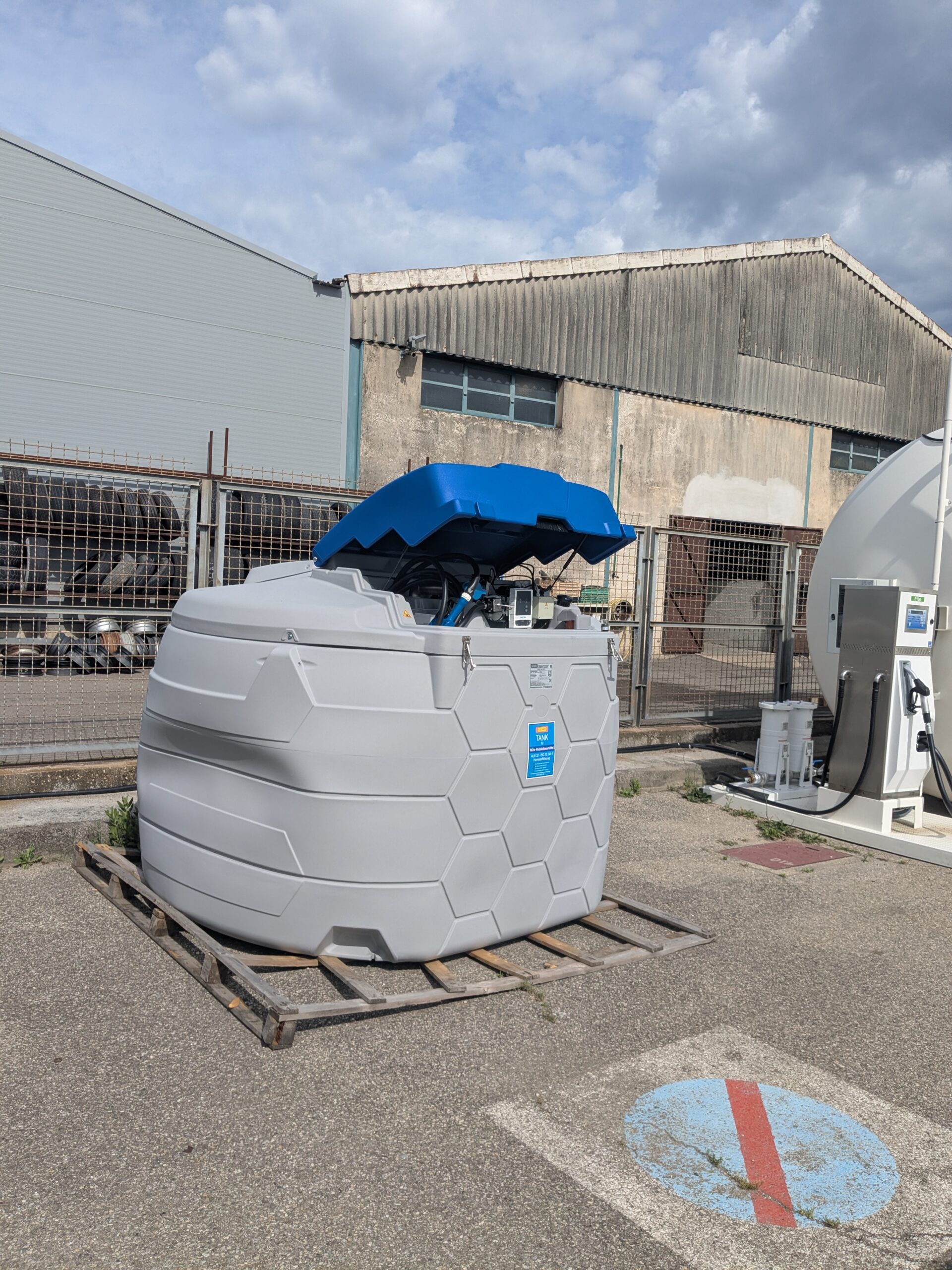
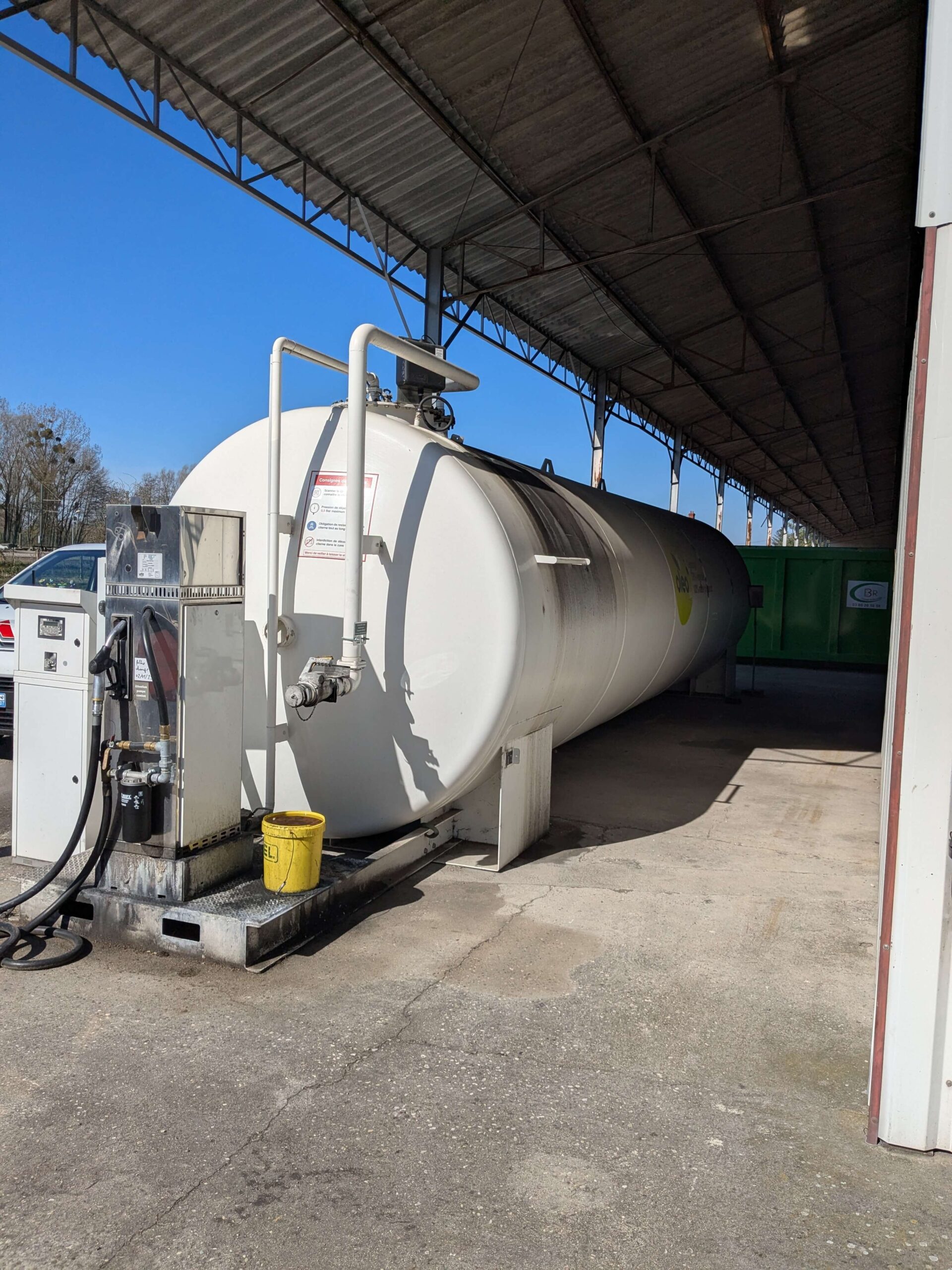
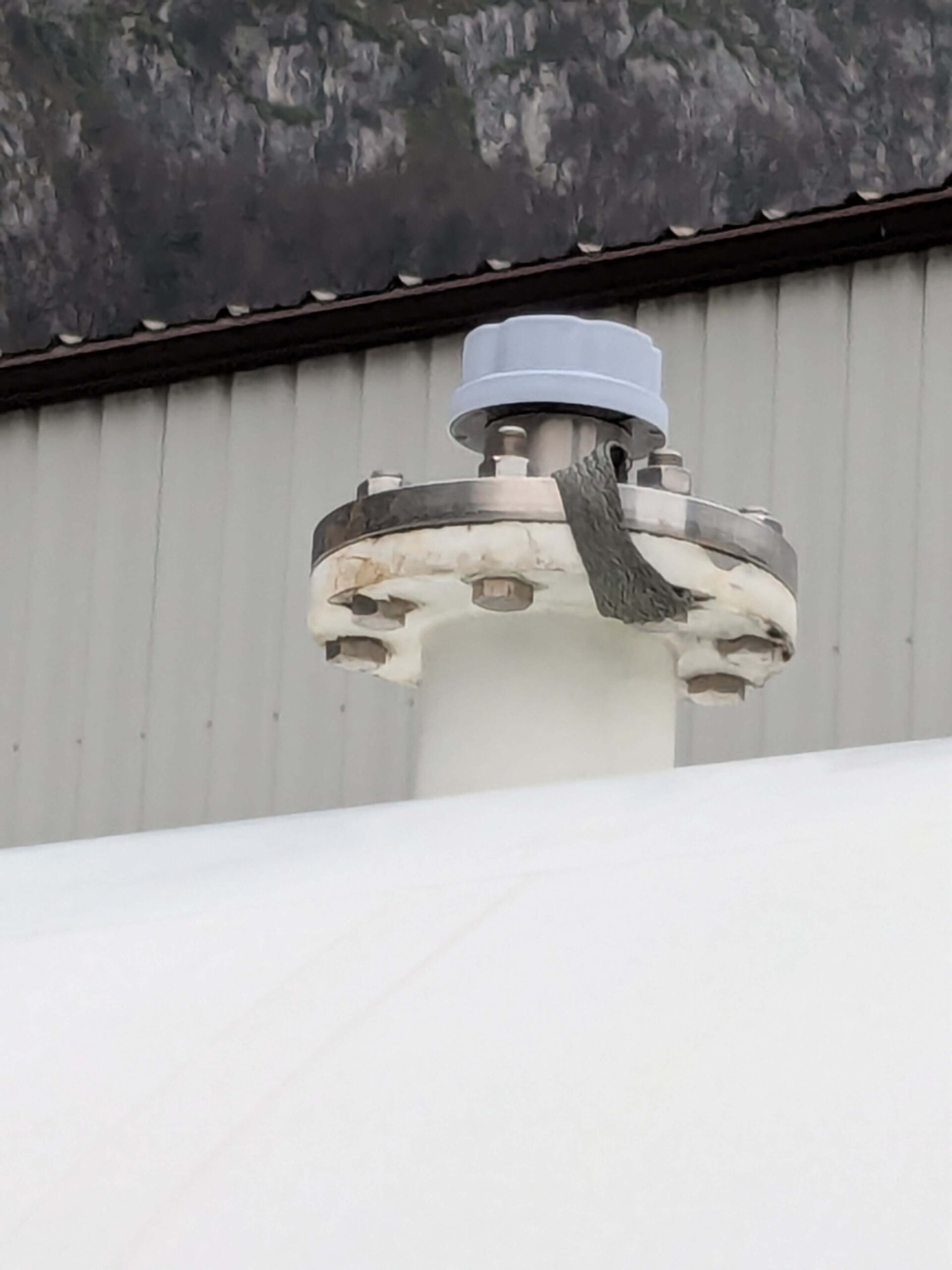
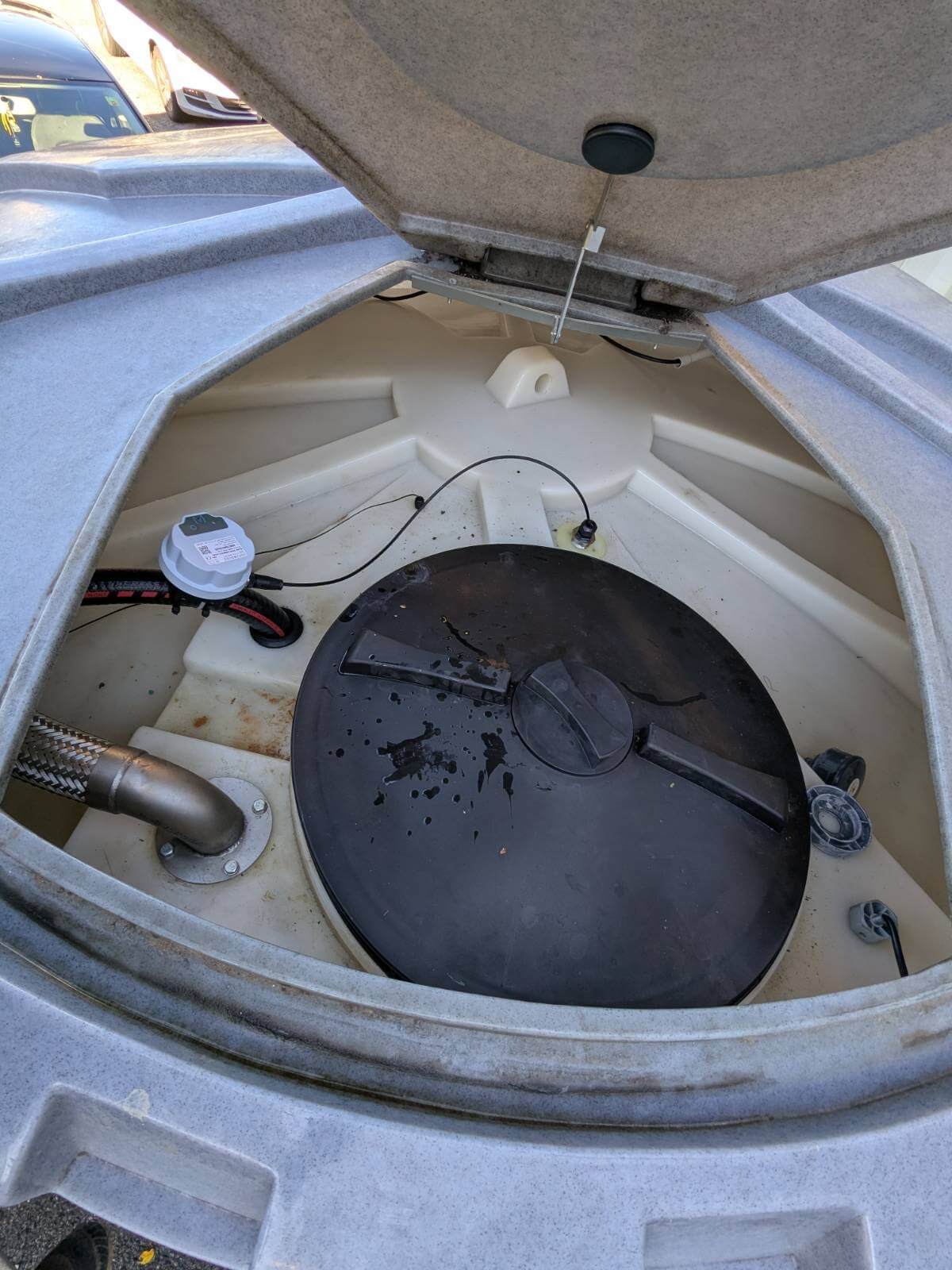


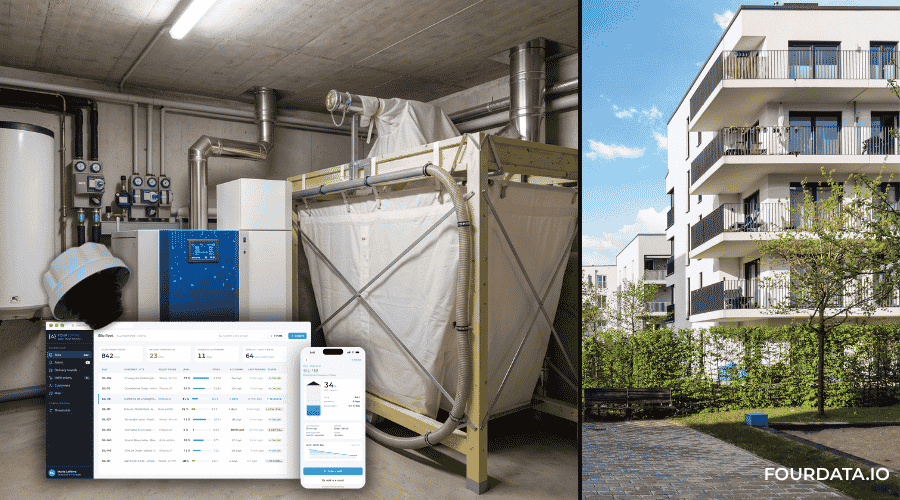
FOUR DATA sensor installations on heating oil and liquid product tanks.
“When a customer orders 400 litres instead of 1,000, the real issue isn’t that delivery. It’s the next one, which has to be slotted in three weeks later without knowing where they stand. With the level in front of you, you plan it instead of reacting to it.”
Quentin Gauthray, Key Account Manager France, FOUR DATA
The distributors who get the most value from telemetry do not use it only to avoid run-dries. They use it to decide which customer to deliver, when and in which round.
The data can also feed the distributor’s ERP through an API, so that order preparation starts directly from measured levels.
Where to start before the winter peak
- Identify the customers splitting their orders. Pull from the ERP the customers whose average order quantity has fallen since the spring.
- Equip isolated and critical customers first. Tanks far from the depot and customers sensitive to cold are the ones that cost the most in an emergency.
- Set thresholds to match your delivery lead time. A useful alert fires when autonomy drops below your usual lead time, plus a safety margin.
- Offer automatic delivery with monthly payments. It is the most direct commercial answer to order splitting.
- Connect levels to your ERP. API integration avoids double entry and speeds up round planning.
Myth vs. reality
Myth: a small delivery is never profitable.
Reality: slotted into a dense round, it can be. The same quantity delivered as a one-off emergency almost never is.
FAQ
Take back control of your rounds this winter
The FOUR DATA teams review your fleet, identify the tanks to equip first and support you from the sensor through to the platform.
Article written with the expertise of Quentin Gauthray, Key Account Manager France at FOUR DATA, who supports heating oil and fuel distributors in the supervision of their customer tank fleets.
You may also be interested in these articles :